Author: Siv Vatana

  • When I Signed Up for a CSR Session and Found a Community

    When I Signed Up for a CSR Session and Found a Community

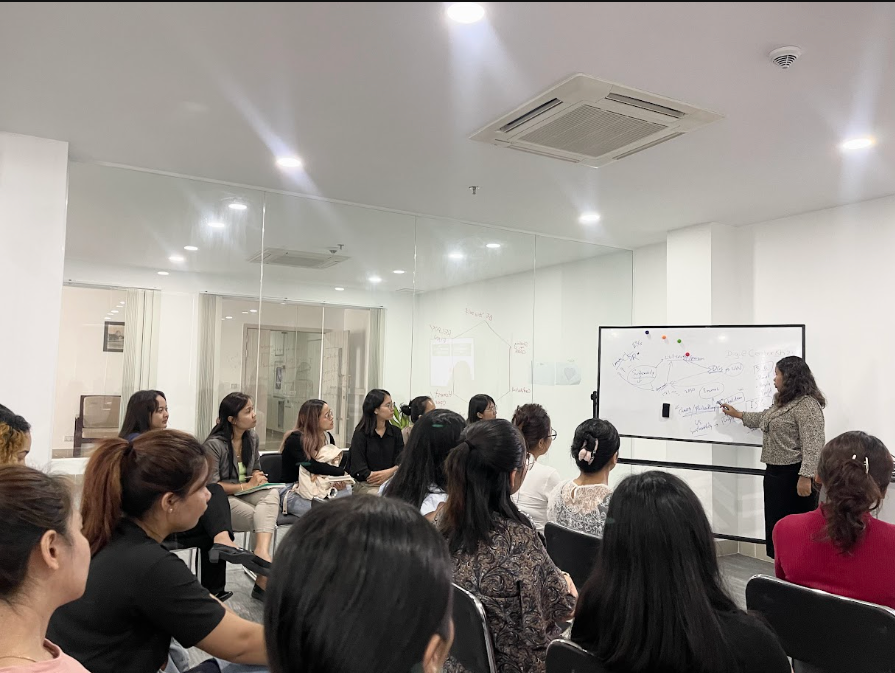
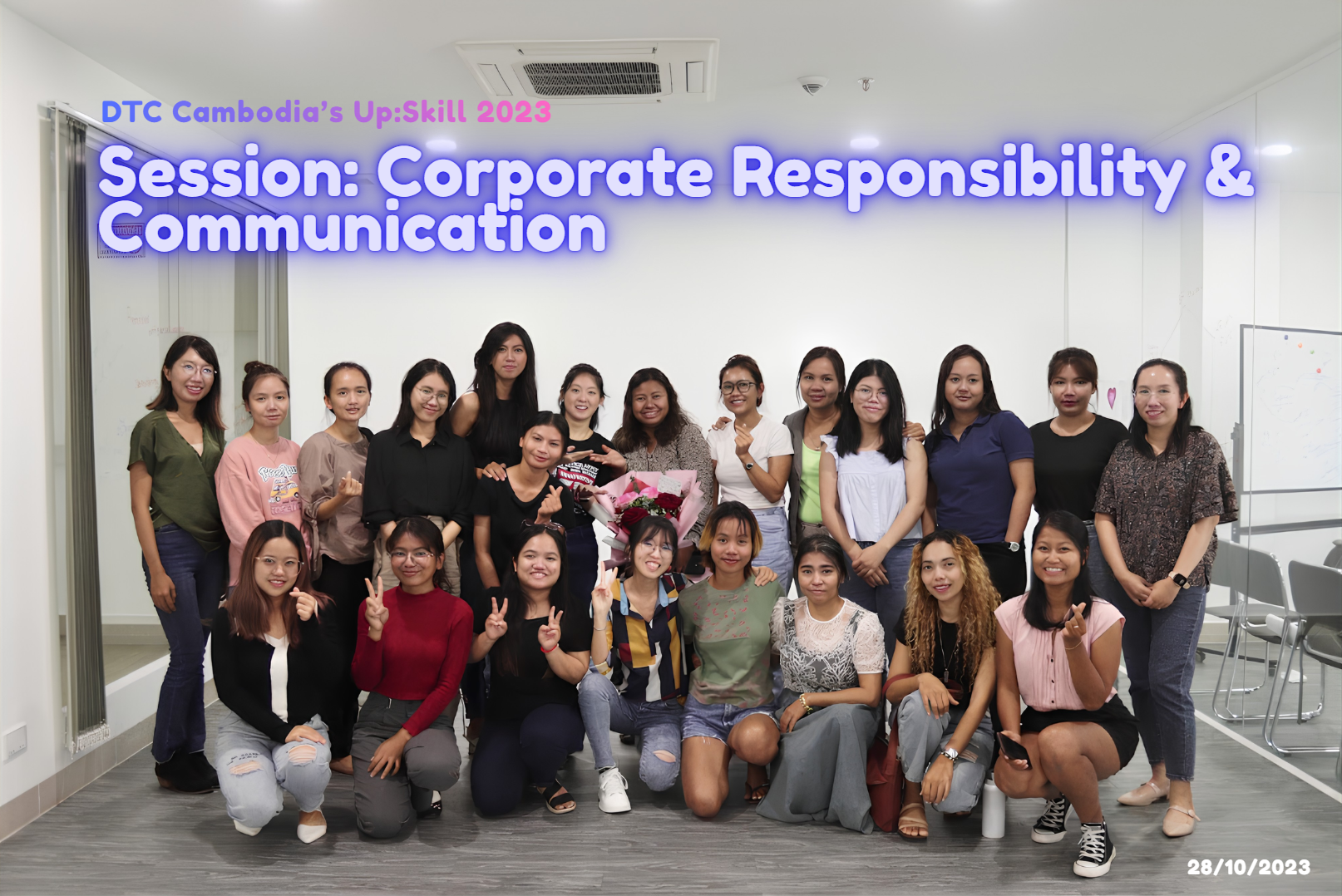
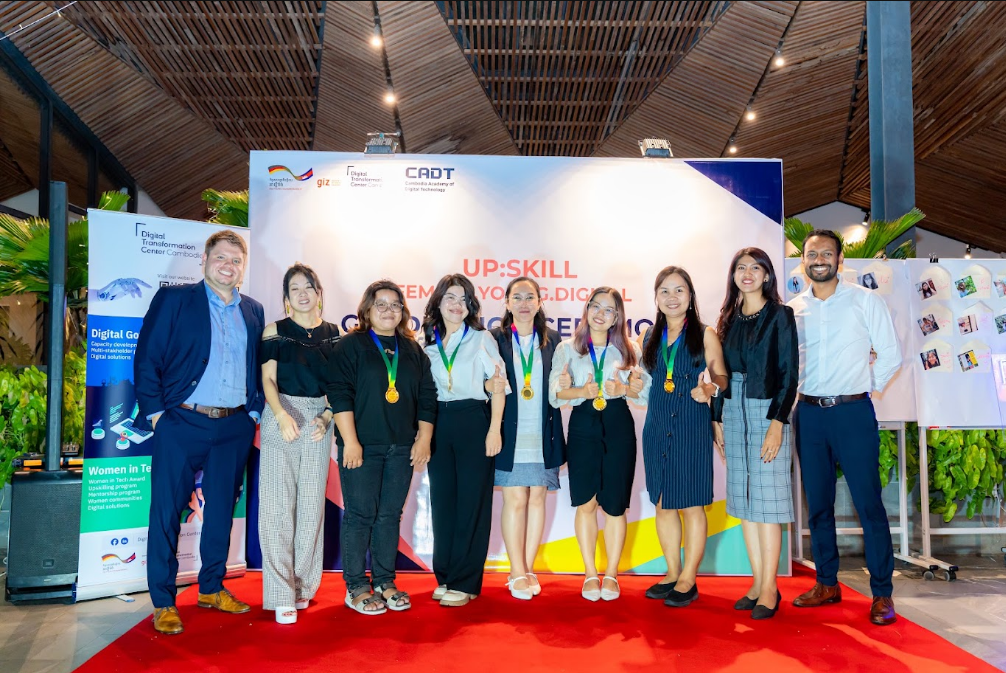
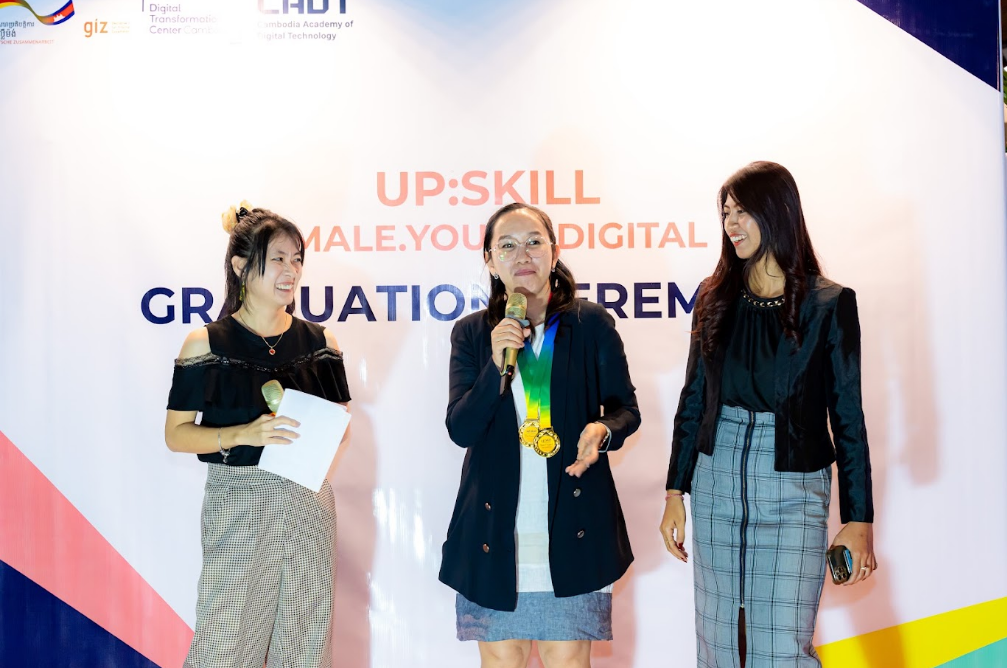
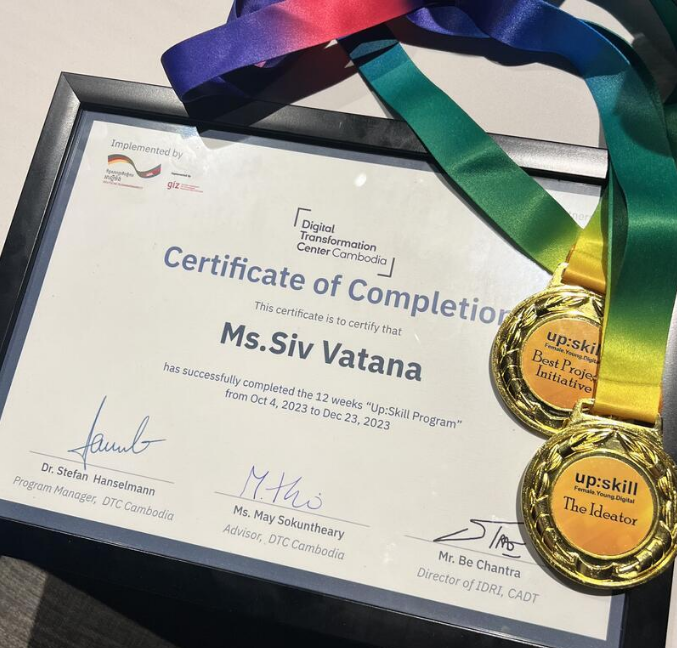
    In 2023, I joined the first cohort of Up:skill Women in Tech, a programme organised by the Cambodia Academy of Digital Technology (CADT), Digital Transformation Center Cambodia (DTC), and GIZ.

    The programme brought together women from different backgrounds and career stages for sessions on technology, professional development, leadership, and other parts of working life.

    I didn’t join because I was looking for a community.

    I joined because I saw a session on corporate social responsibility.
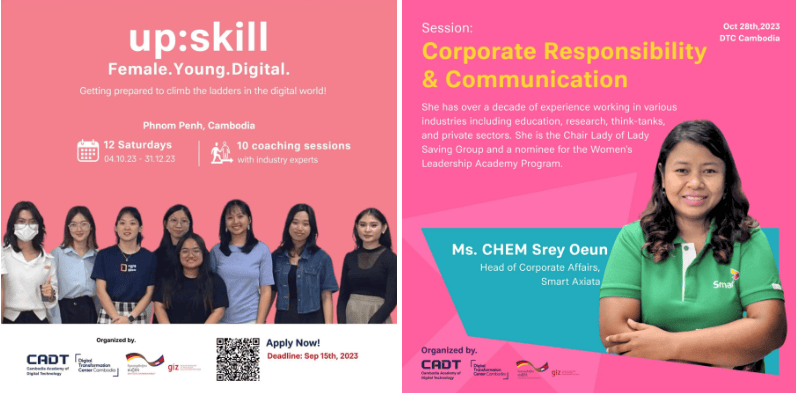
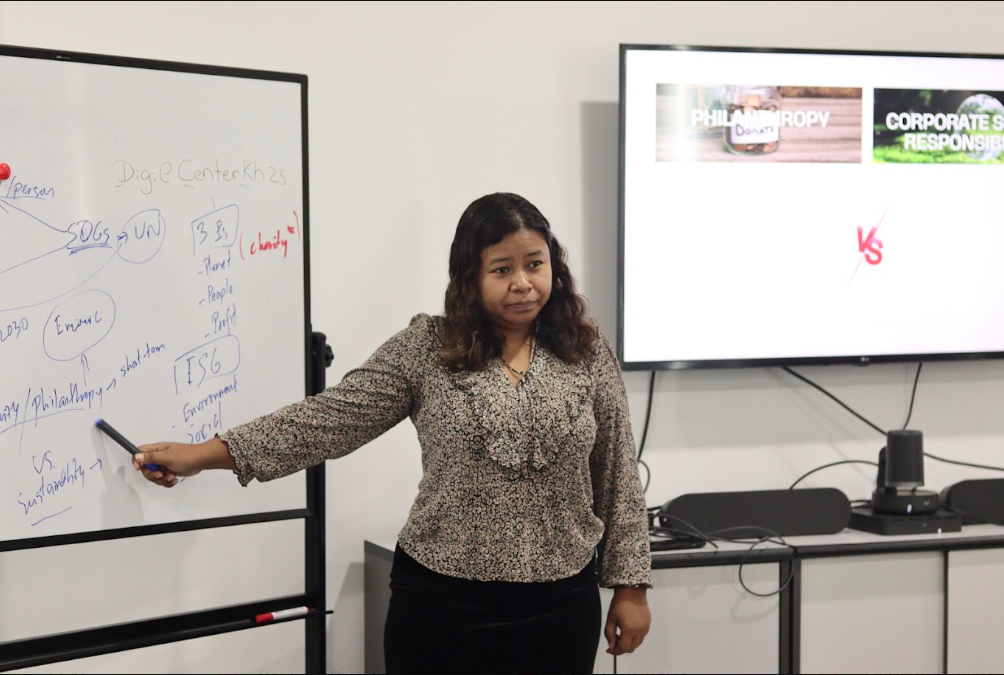
    The CSR session that first brought me into Up:skill.

    At the time, I was working on a foreign investment project and expanding a dataset on companies involved in CSR activities in Cambodia. Most of my previous exposure to CSR had been through the civil society side, so I was curious about how companies themselves understood it.

    I wanted to hear a different perspective.

    That was the reason I signed up.

    I didn’t know that the session would eventually lead me somewhere else.
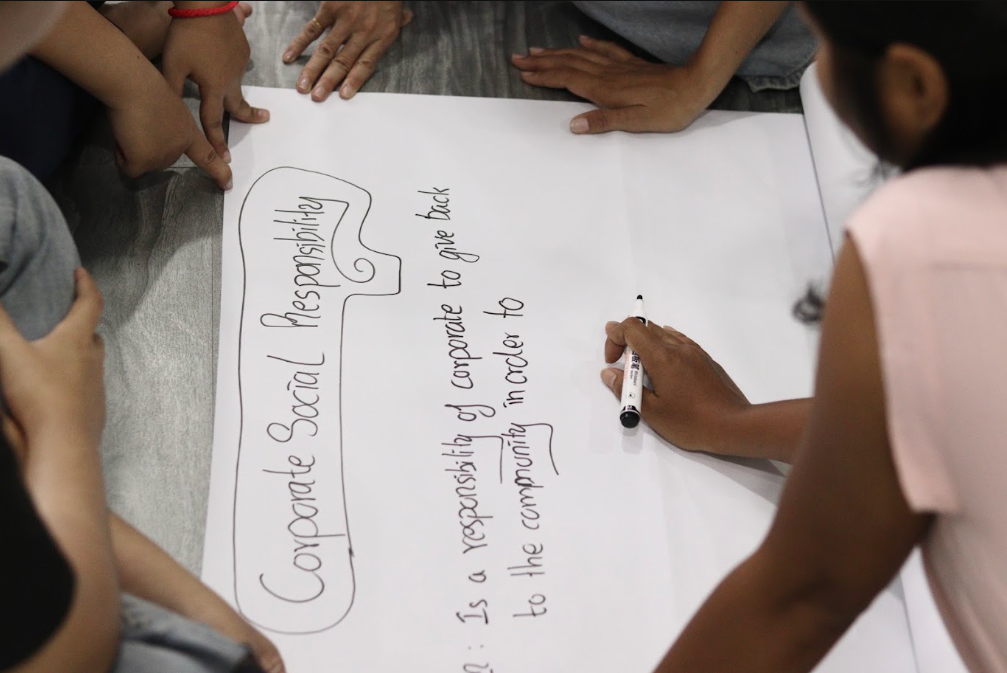
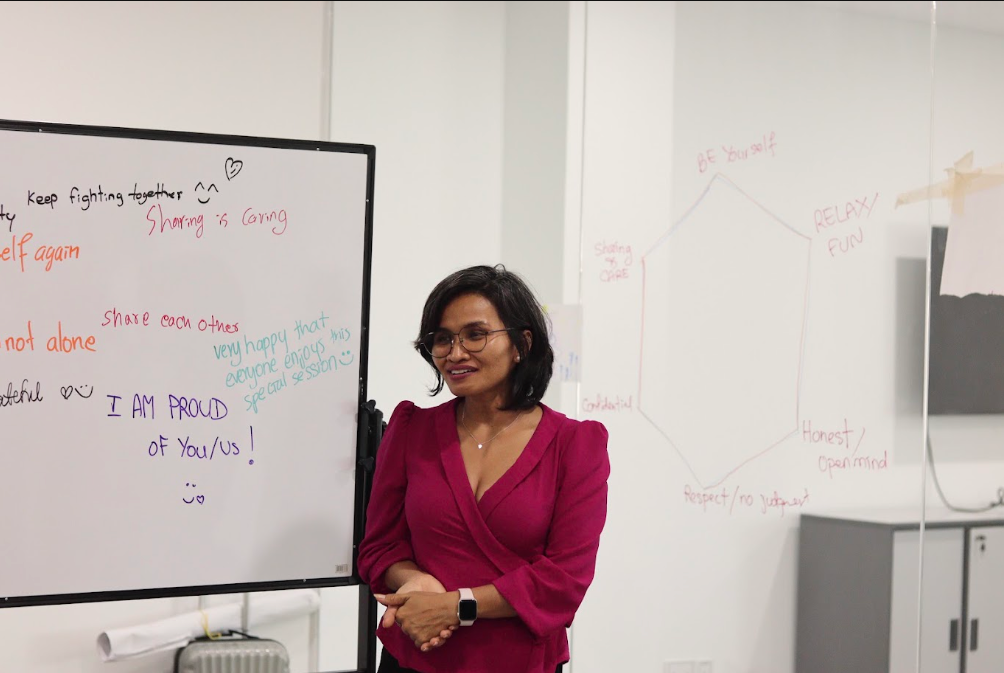
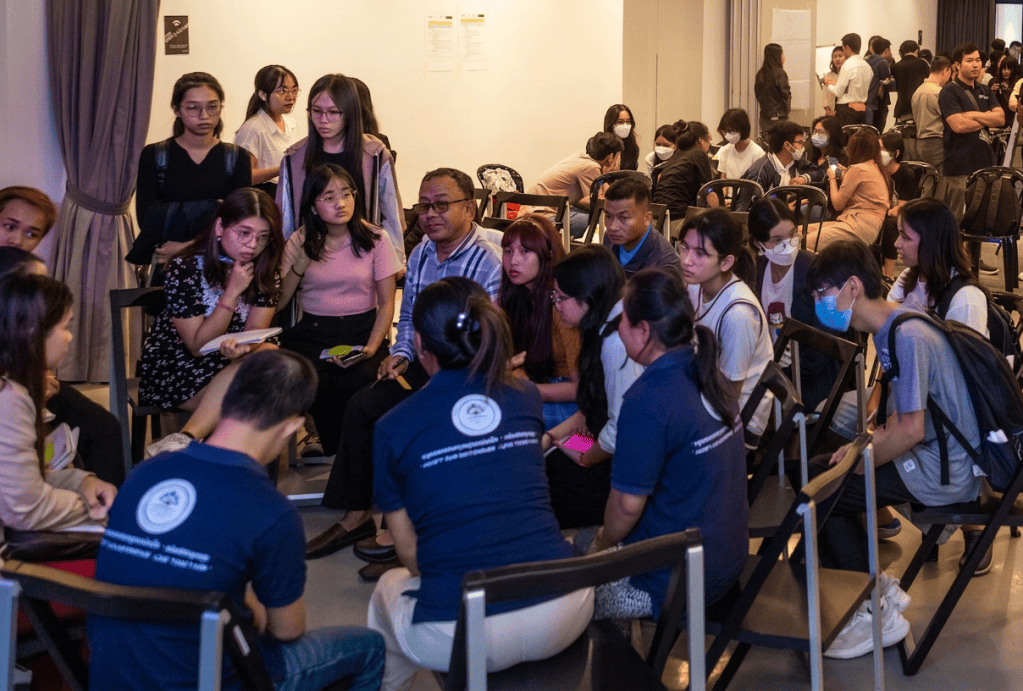
    I came for the content. I stayed for the room.

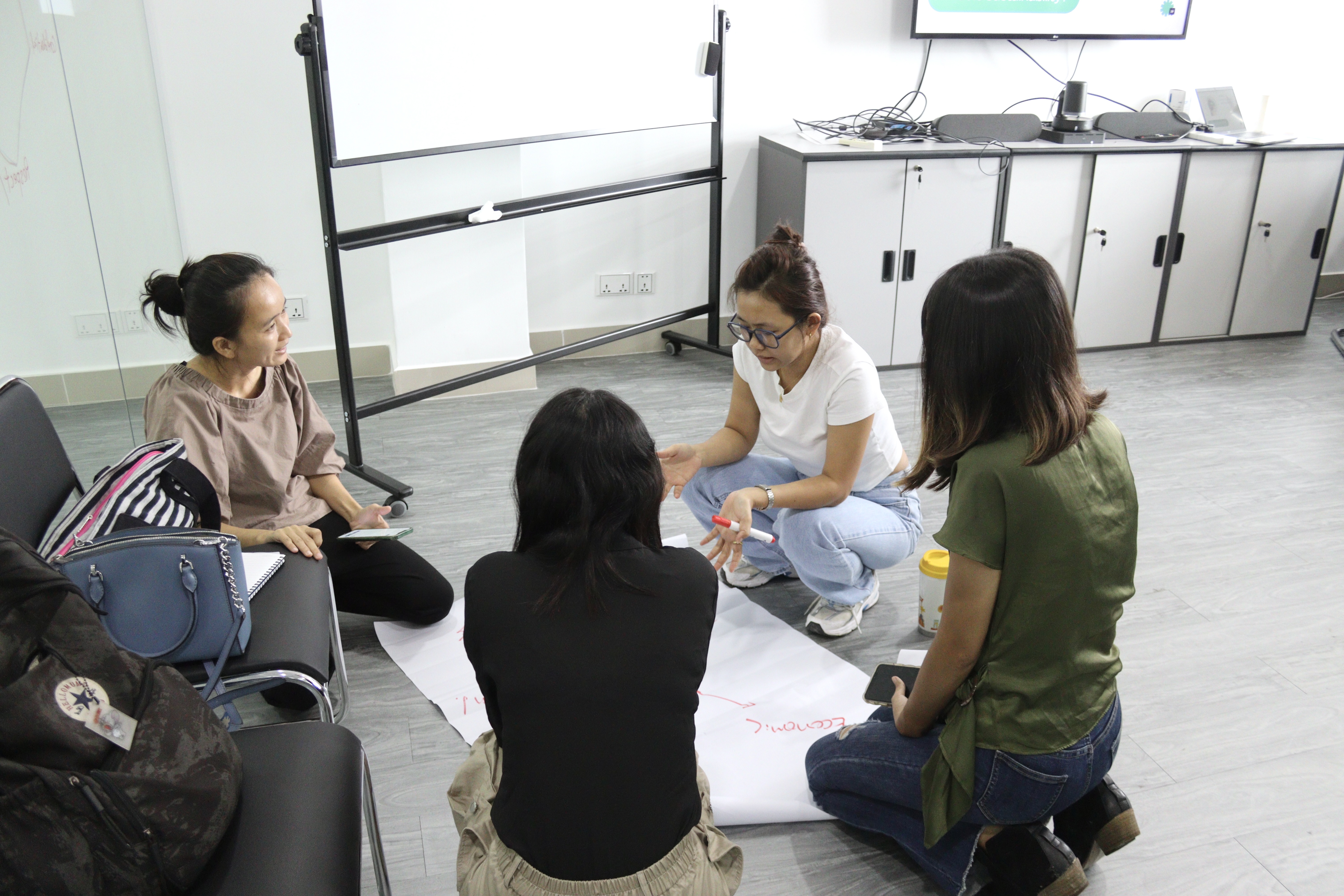
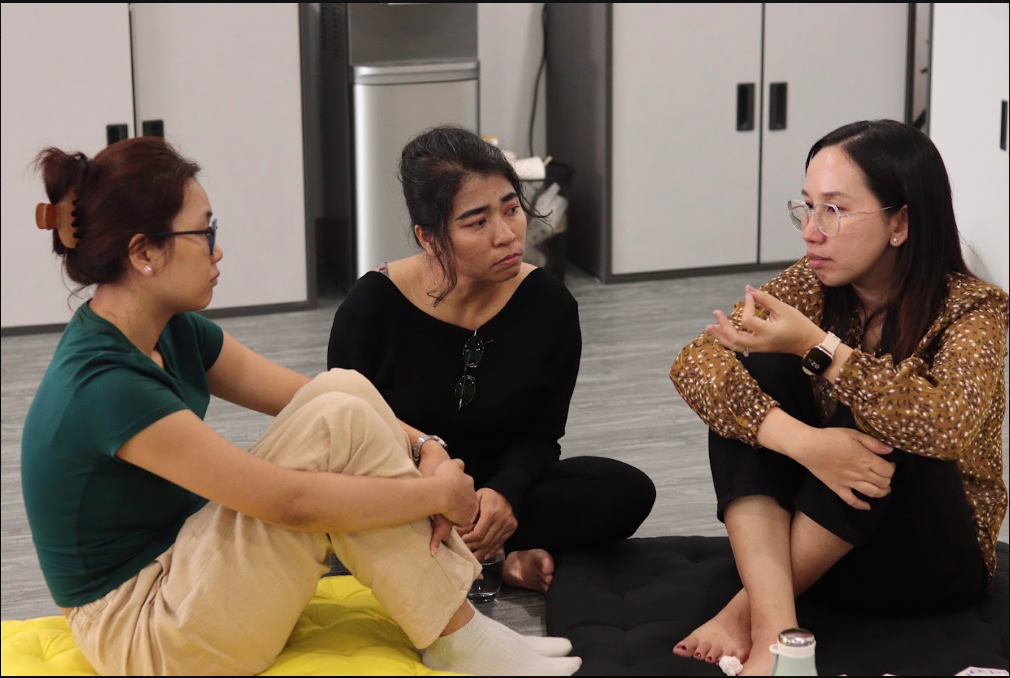
    Every weekend, we learned from different experts and then had space to talk with one another.

    The CSR session may have been what first brought me into the room, but it was not the only reason I kept coming back.

    Each session offered something different—new ideas, practical exercises, conversations about technology and careers, and moments that made me reflect on my own work and growth.

    Looking back, I think I learned in more than one way—through the sessions, through the work we did together, and through the people I met along the way.

    What stayed with me wasn’t only what we learned.

    It was the room.

    There were women who were just starting their careers and women who were already leading teams. There were people from different sectors, generations and professional experiences.

    Yet, somehow, the usual distance between senior and junior felt smaller.

    People shared openly.

    There wasn’t much pressure to have the perfect answer or to present yourself as someone who already had everything figured out.

    You could simply talk about what you had experienced.
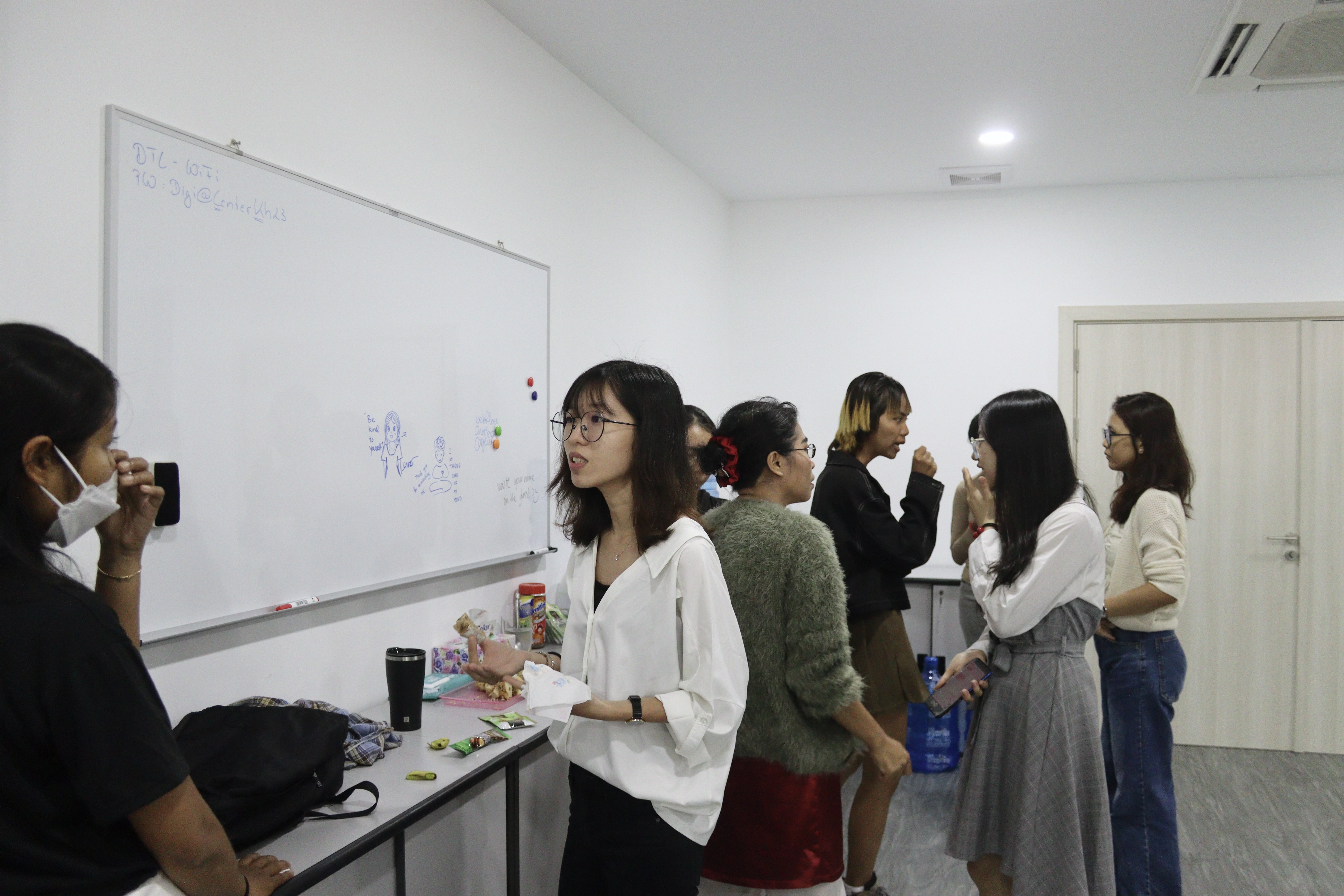
    I found myself looking forward to those weekends.

    There was something about being around women who could talk honestly about work, ambition, uncertainty and life that felt different.

    The session I still remember

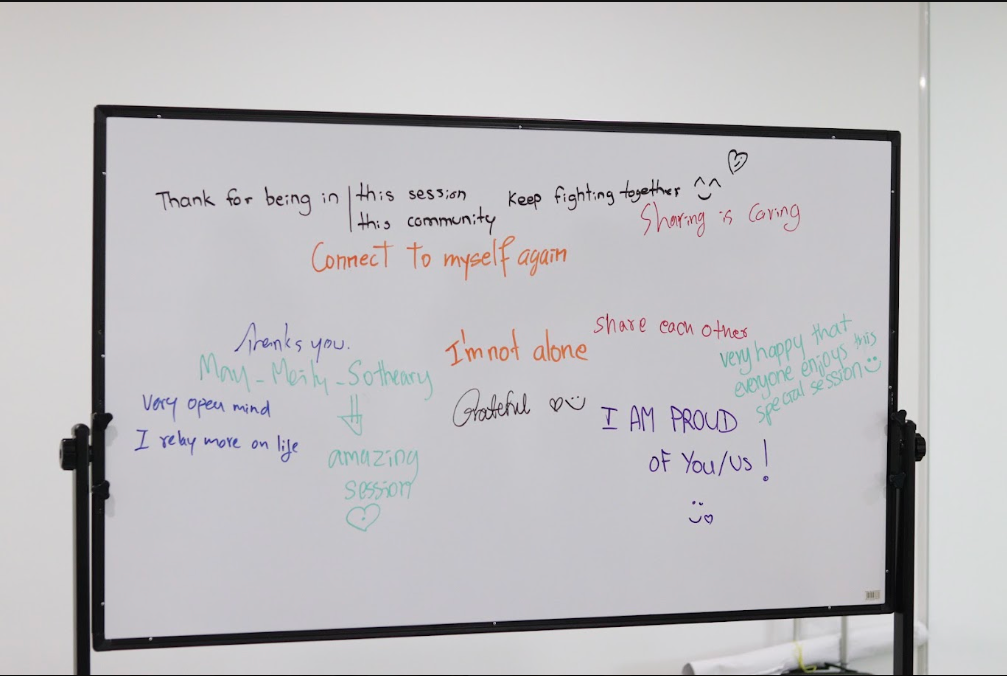
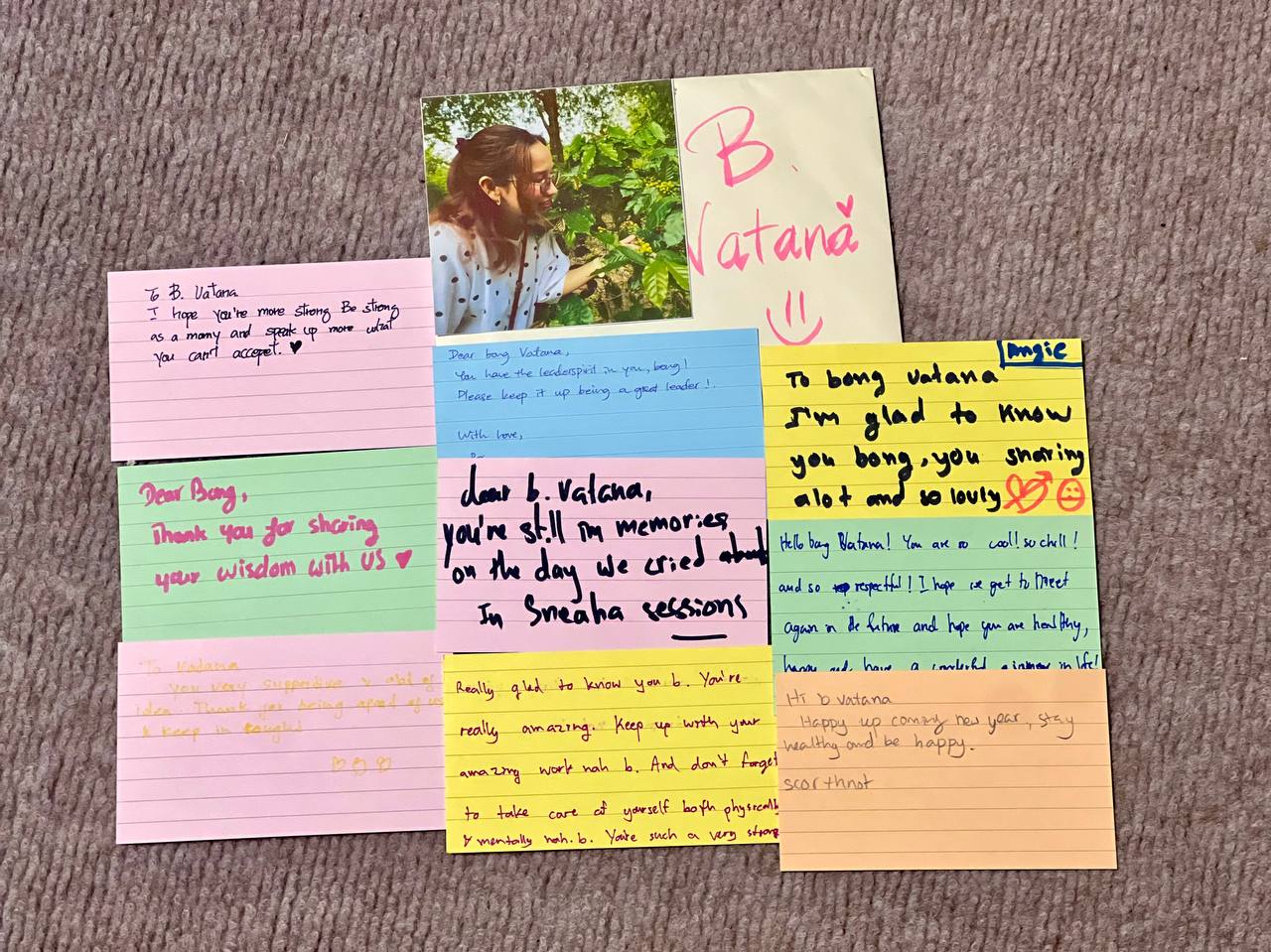
    One session about self-love has stayed with me.

    The conversation moved beyond the usual professional topics.

    Women talked about their experiences as girls, as women, as leaders and as junior staff. Some shared things that were difficult. Others listened.

    There was very little judgement.

    What struck me was how people seemed to value one another not by their title or position, but by how far they had come.

    For a few hours, nobody needed to prove that they deserved to be there.

    We were simply women trying to understand ourselves and our lives a little better.
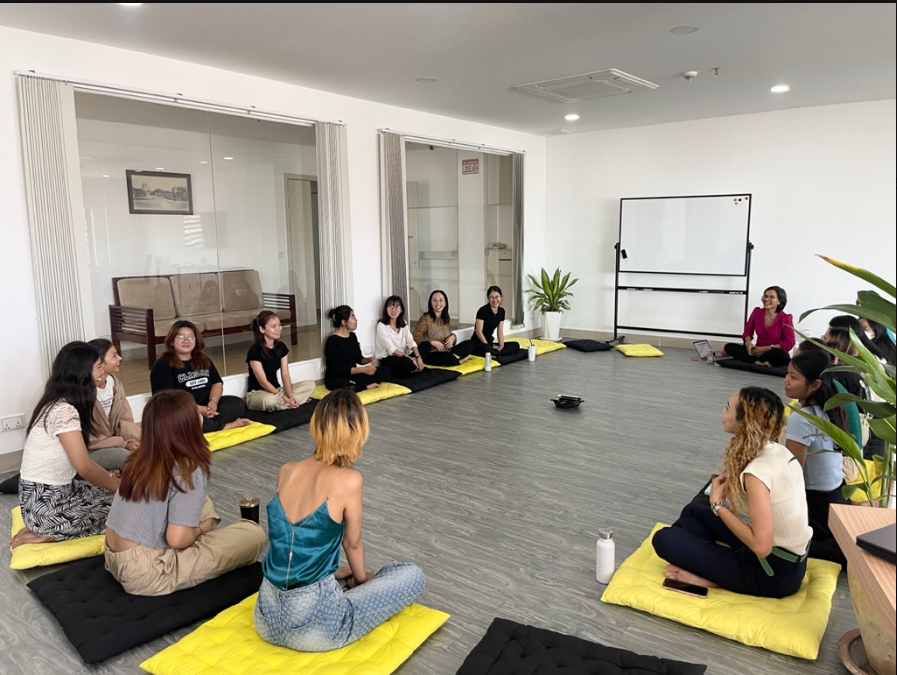
    I think that was one of the first times I consciously noticed how much the design of a space affects what people are willing to bring into it.

    People can know a lot and still remain quiet.

    They can have good ideas and still hesitate to share them.

    They can be capable of leading and still wonder whether they are good enough.

    Sometimes what changes that is not another lesson.

    Sometimes it is the room.

    And eventually, that room became a place where we had to build something together.

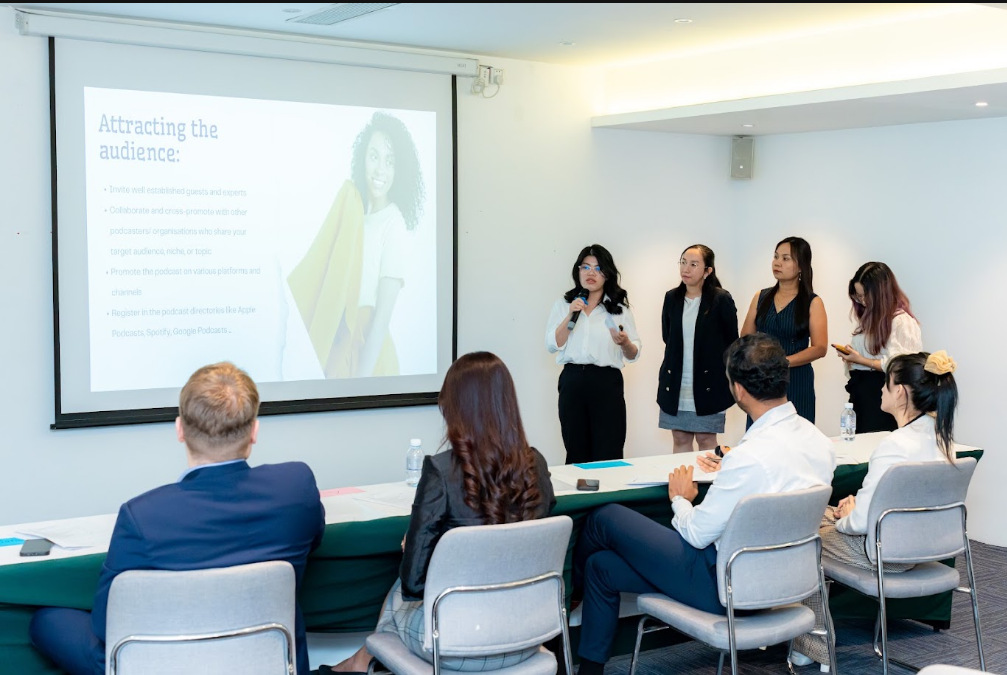
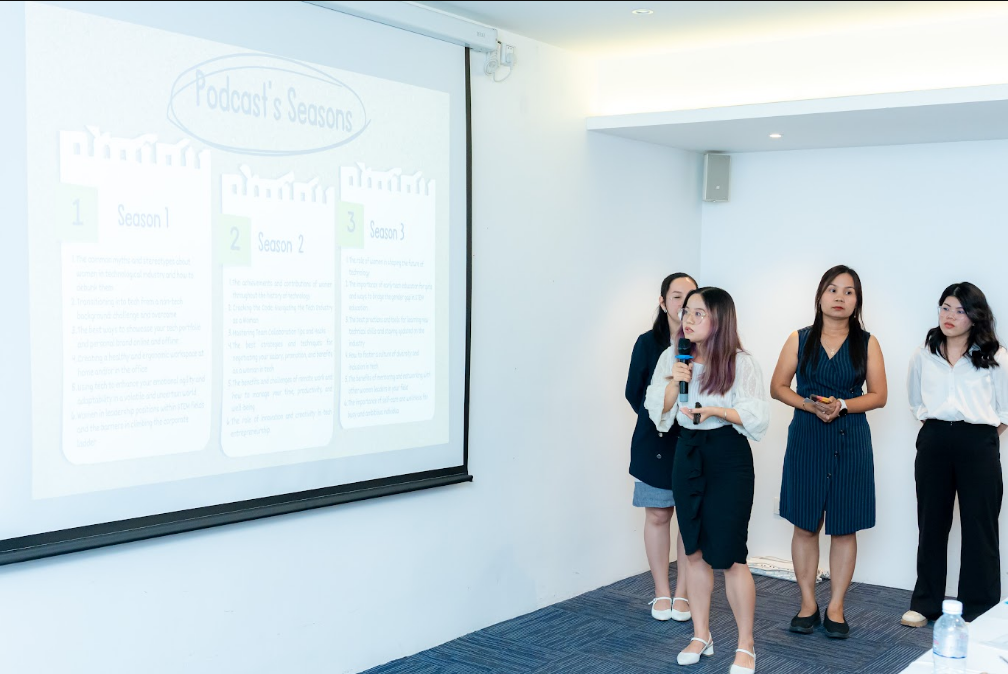
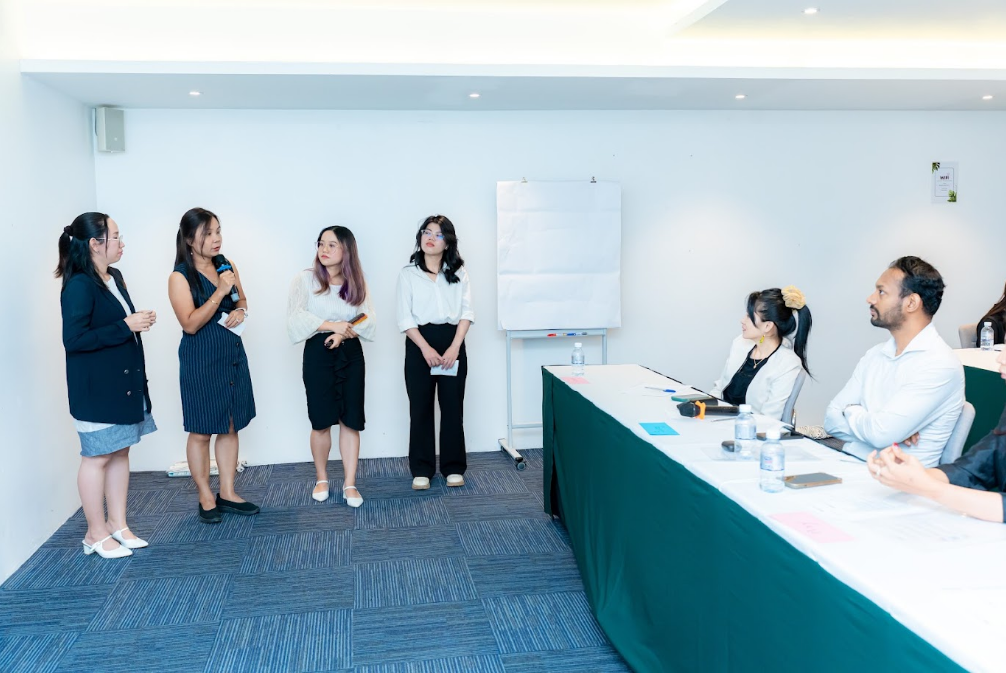
    Later in the programme, we were divided into groups and asked to develop a project.

    Our team brought together women from different sectors and different stages of life. We had our jobs, responsibilities and busy schedules outside the programme, but somehow we found a way to work together.

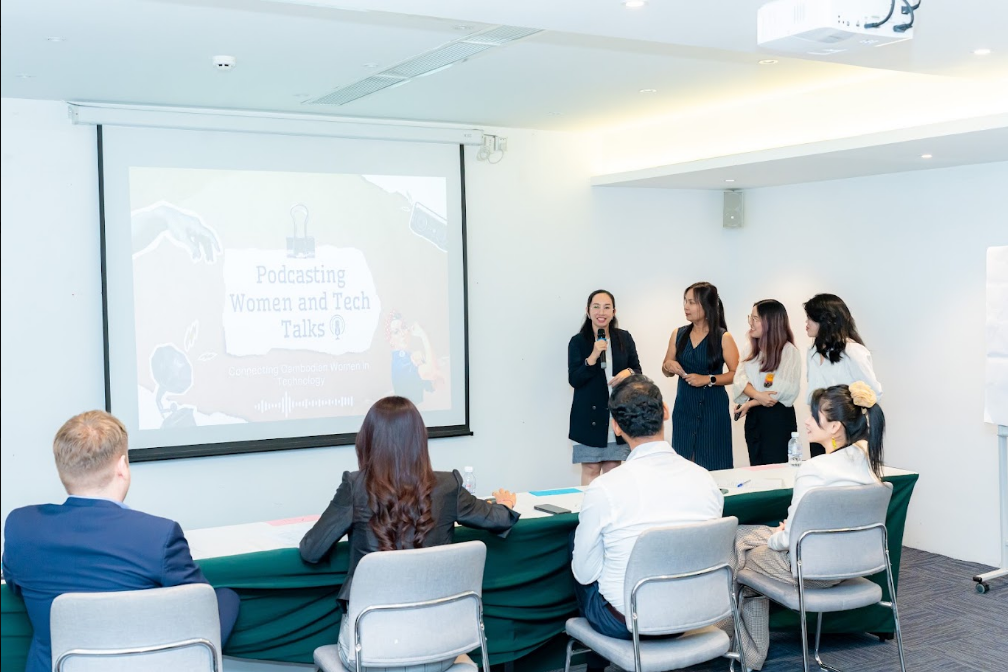
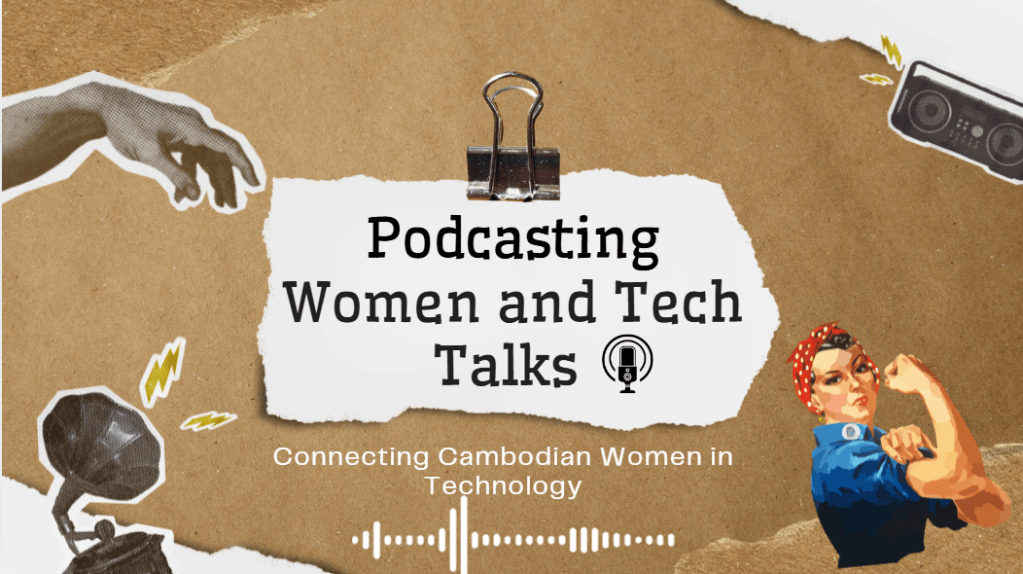
    We came up with an idea for Women and Tech Talks, a podcast concept to connect Cambodian women in technology and create more opportunities for professional women and younger girls to learn from one another.

    We worked through the details together: the purpose, format, language, platforms and how the idea could continue beyond the programme.

    We didn’t begin the project thinking about awards.

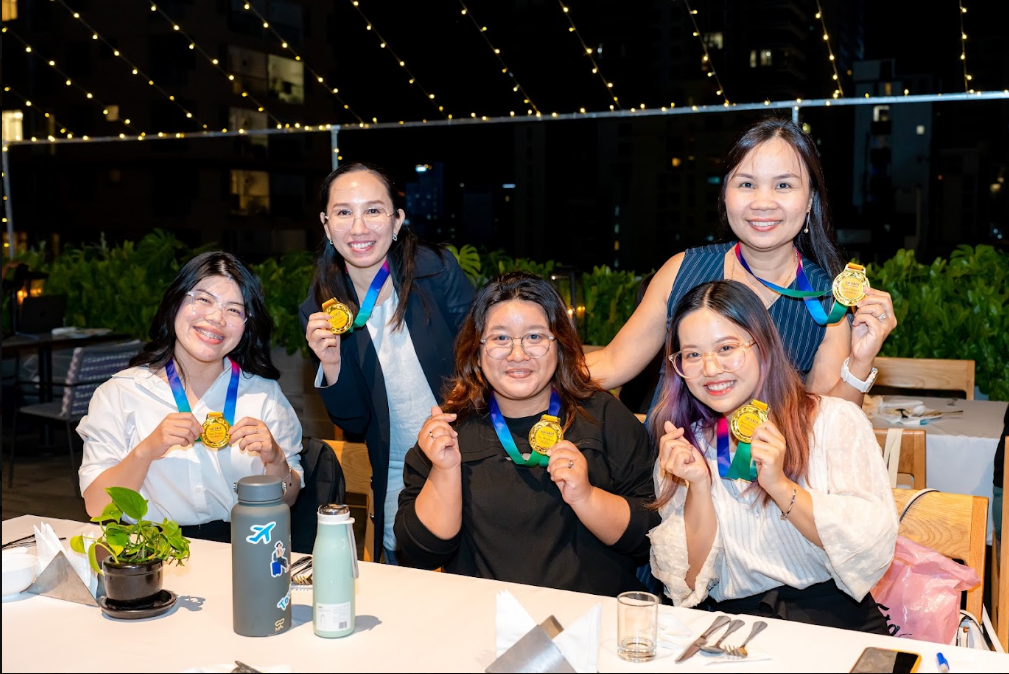
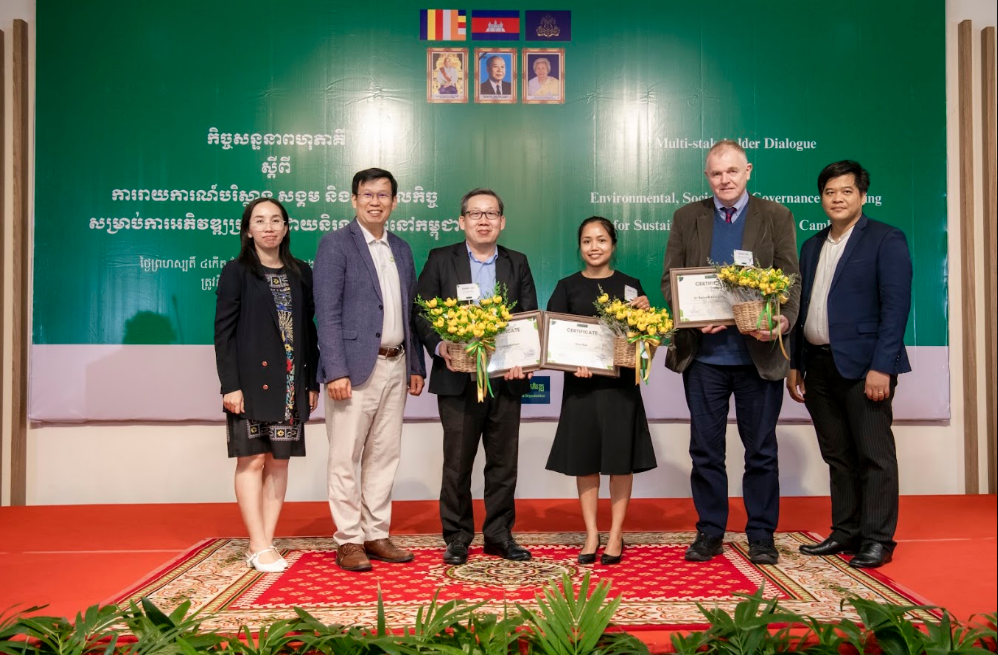
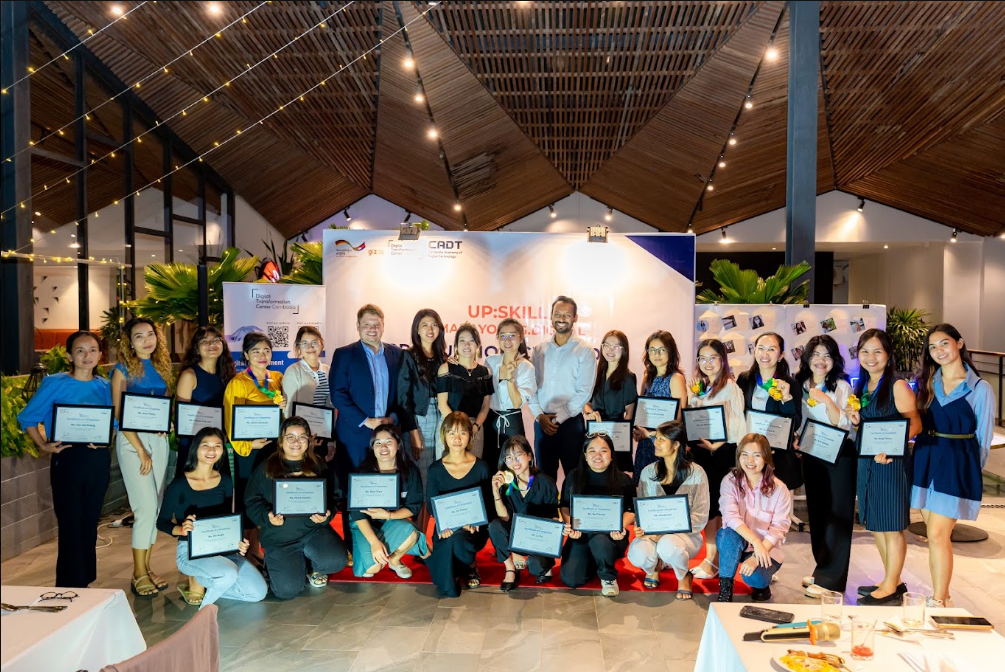
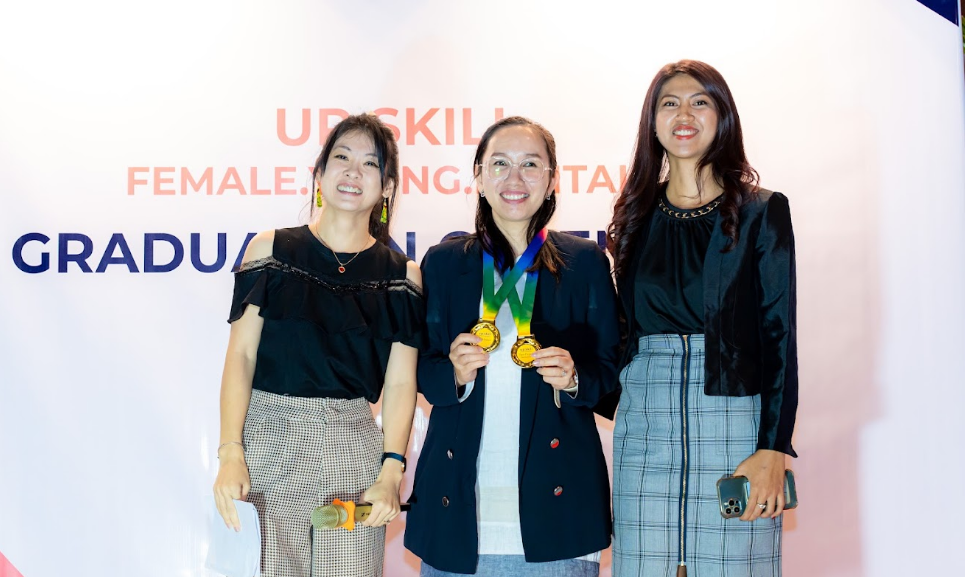
    But when the results were announced, our team received the Best Project Initiative award.
    I was happy, of course.

    But another moment surprised me even more.

    Someone noticed me

    I was nominated for the Ideator Award, recognising participants who actively shared and expressed ideas during the programme.

    I hadn’t expected it.

    In my working life, I tend to pay more attention to the work itself—to the team, the project, the problem we are trying to solve, and what could be improved.

    I don’t usually enter a room thinking about whether someone will notice me.

    So being nominated made me pause.
    It made me wonder what other people had seen in me that I hadn’t noticed in myself.

    At that point in my life, I was carrying many different roles.

    I was a team leader. A project manager. A wife. A mother.

    There were always things to deliver and people to think about.

    From the outside, I probably looked like I was simply getting on with things.

    But being recognised reminded me that the things we quietly do—sharing an idea, helping a team move forward, making a connection, speaking up when something matters—can also be visible to someone else.

    Sometimes we don’t realise we are being seen.

    I left with more than I came for

    Looking back, I still remember the CSR session that first brought me into Up:skill.

    It gave me a perspective I was looking for.

    But it wasn’t the most important thing I took away.

    I also left with memories of women speaking honestly, working together and encouraging one another – and with a little more belief in myself.

    I joined because I wanted to learn something.

    Somewhere along the way, I found a community.

    At the time, I thought that might be where the story ended.

    It wasn’t.
  • Behind the Dialogue: What It Took to Bring Cambodia’s First Multi-Stakeholder Conversation on ESG to Life

    Behind the Dialogue: What It Took to Bring Cambodia’s First Multi-Stakeholder Conversation on ESG to Life

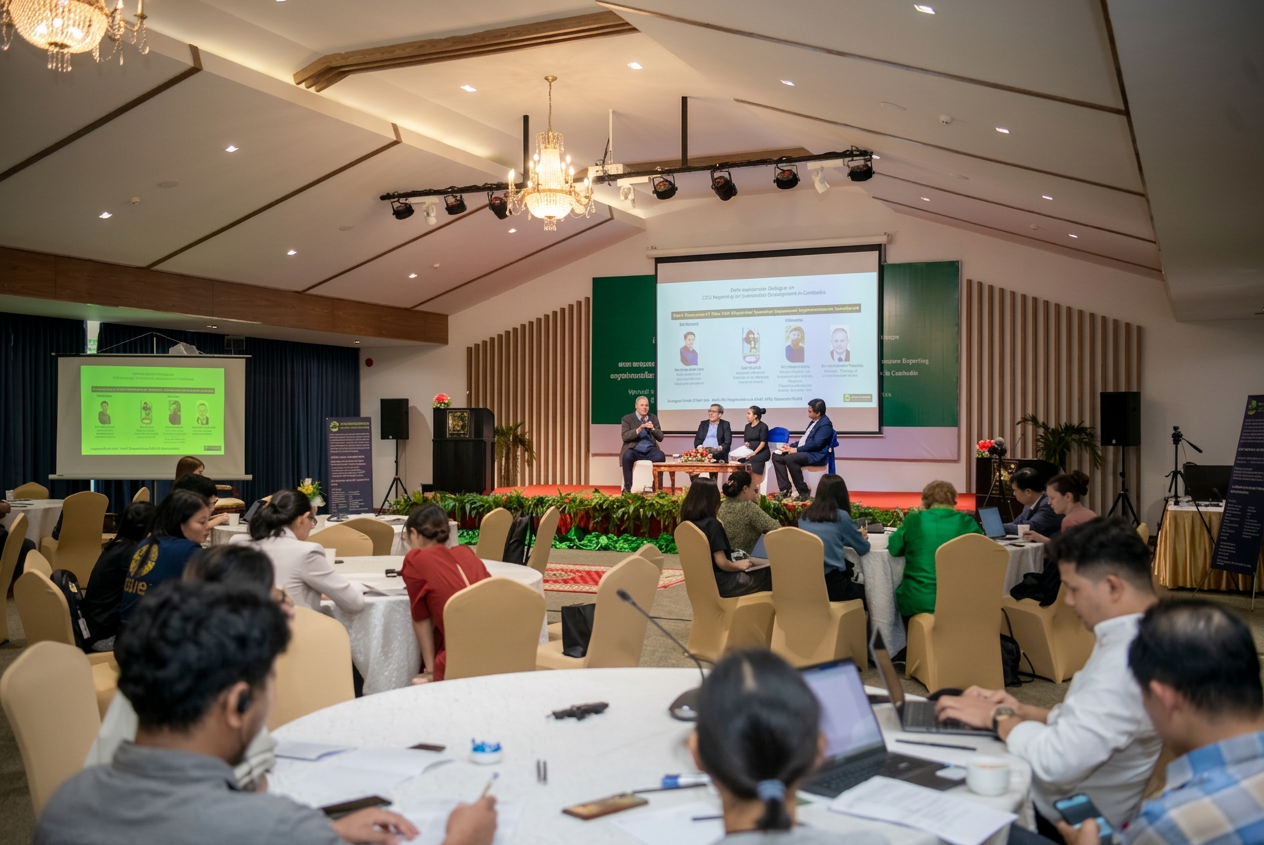
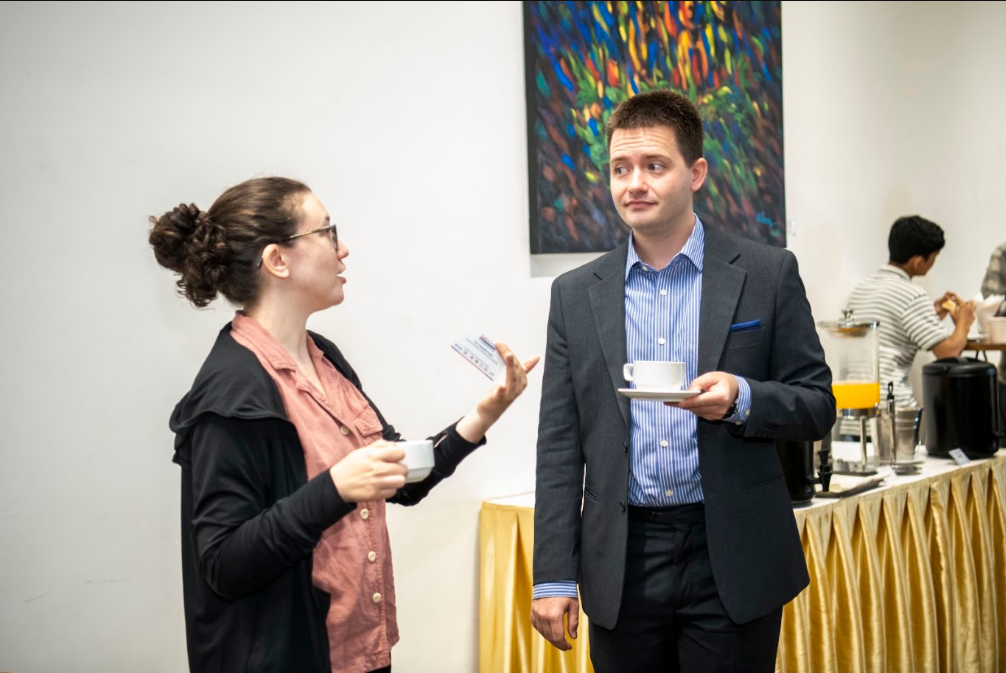
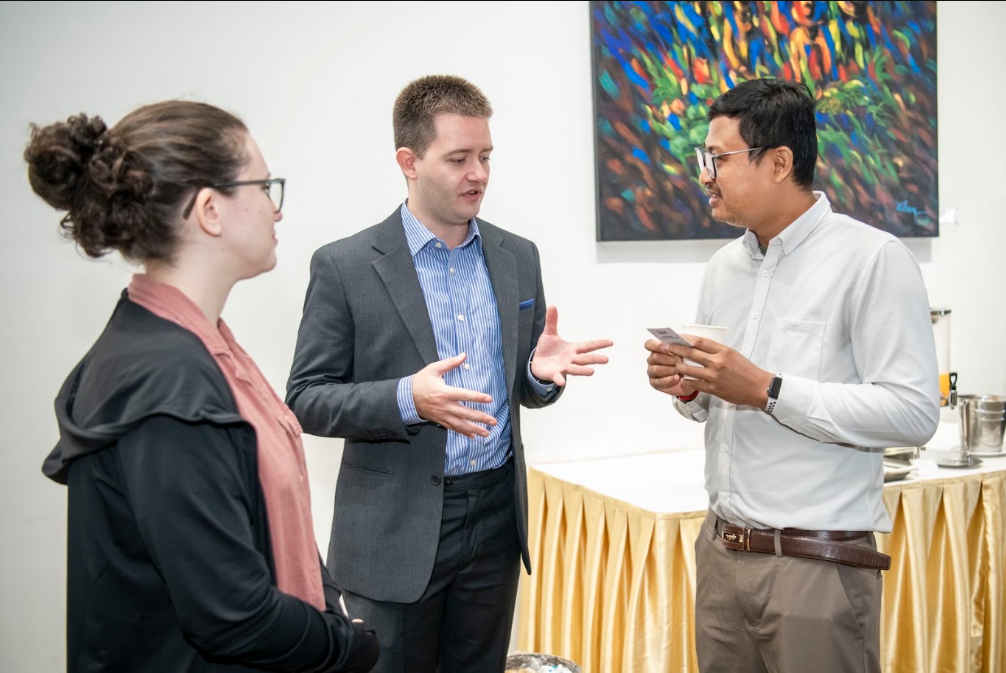
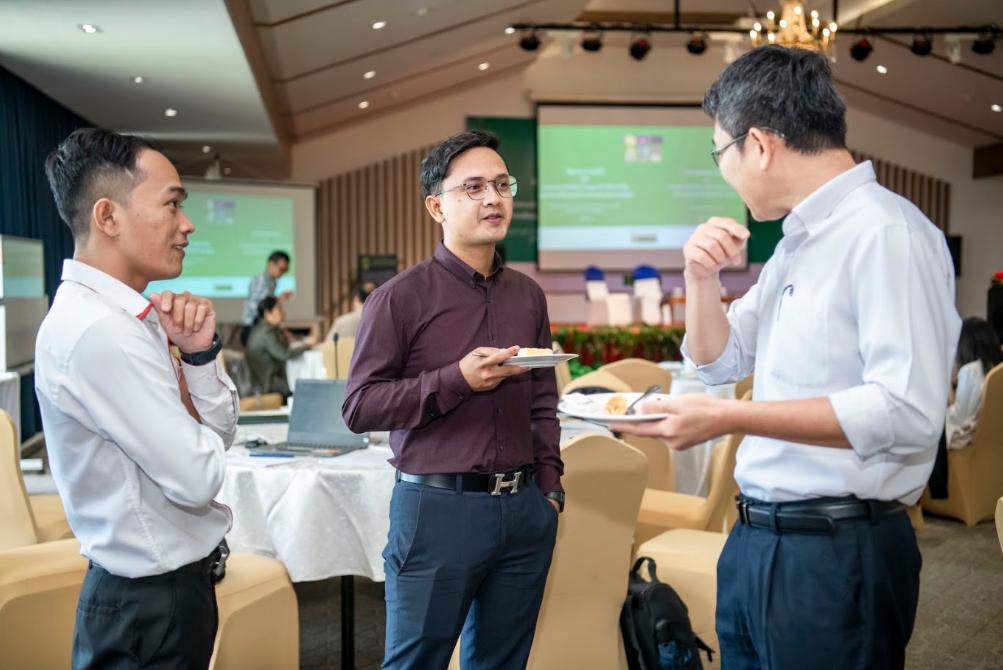
    I still remember the sound of the room before I remember anything else — chairs being shifted into rows, someone testing a microphone twice, small conversations overlapping in Khmer and English near the coffee table.

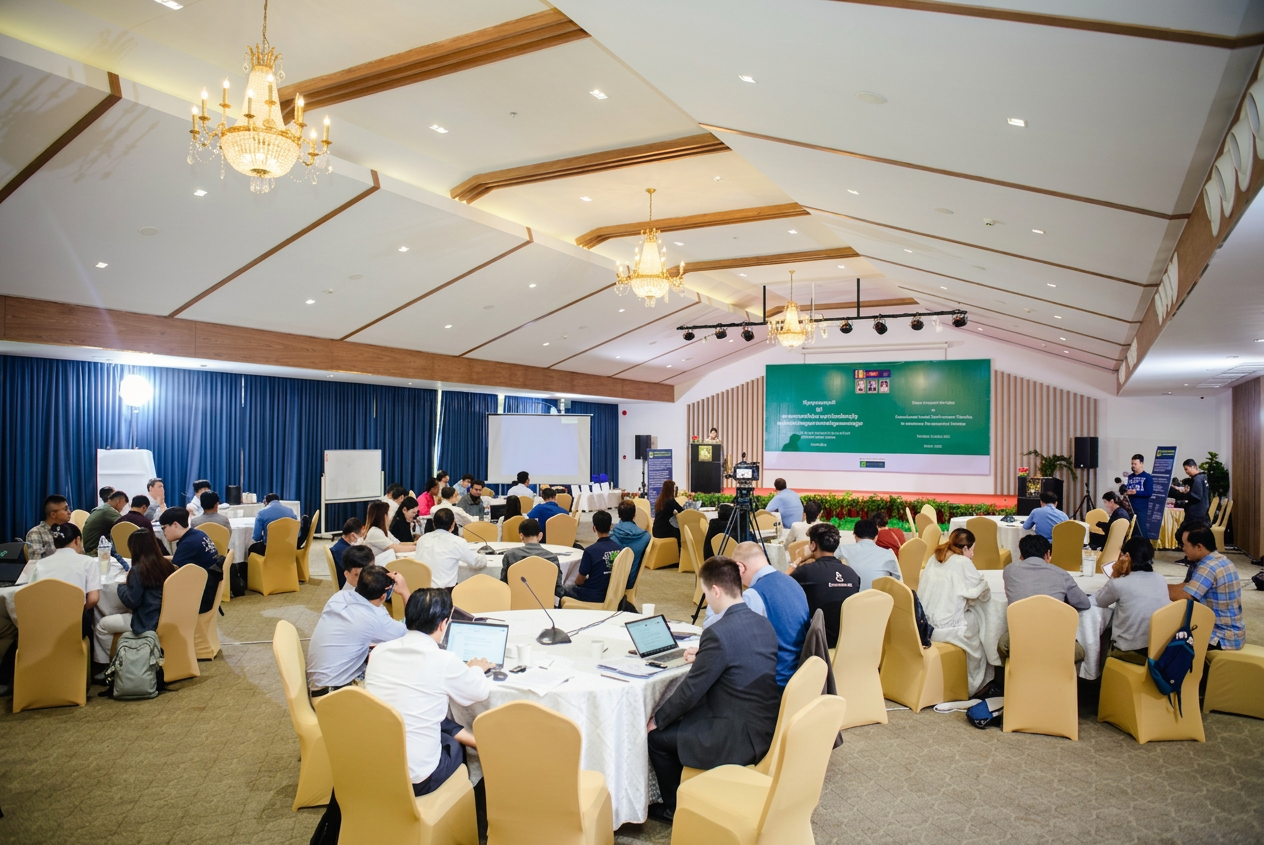
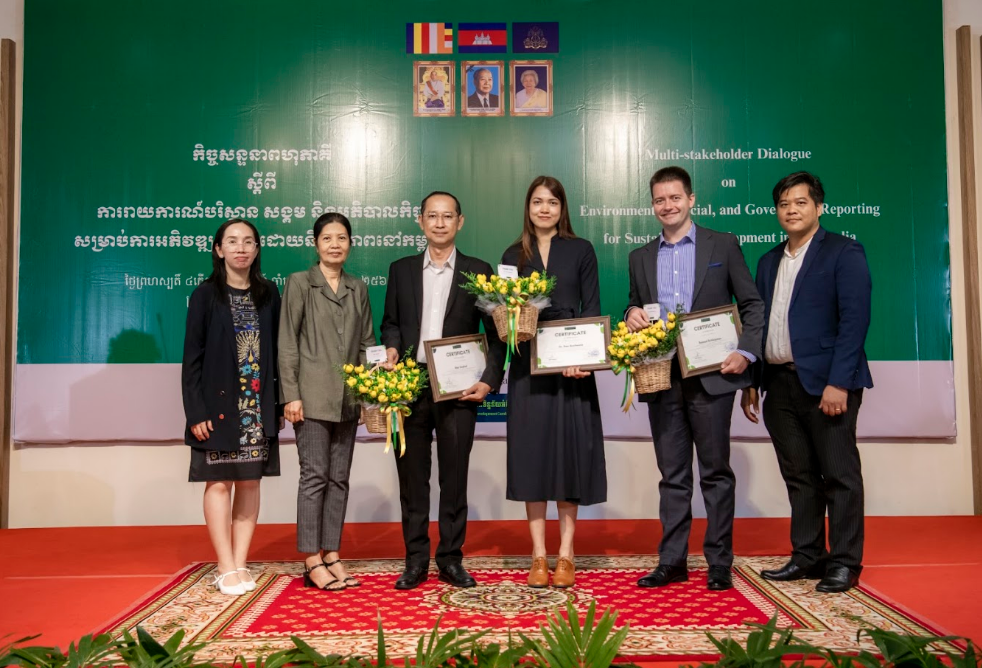
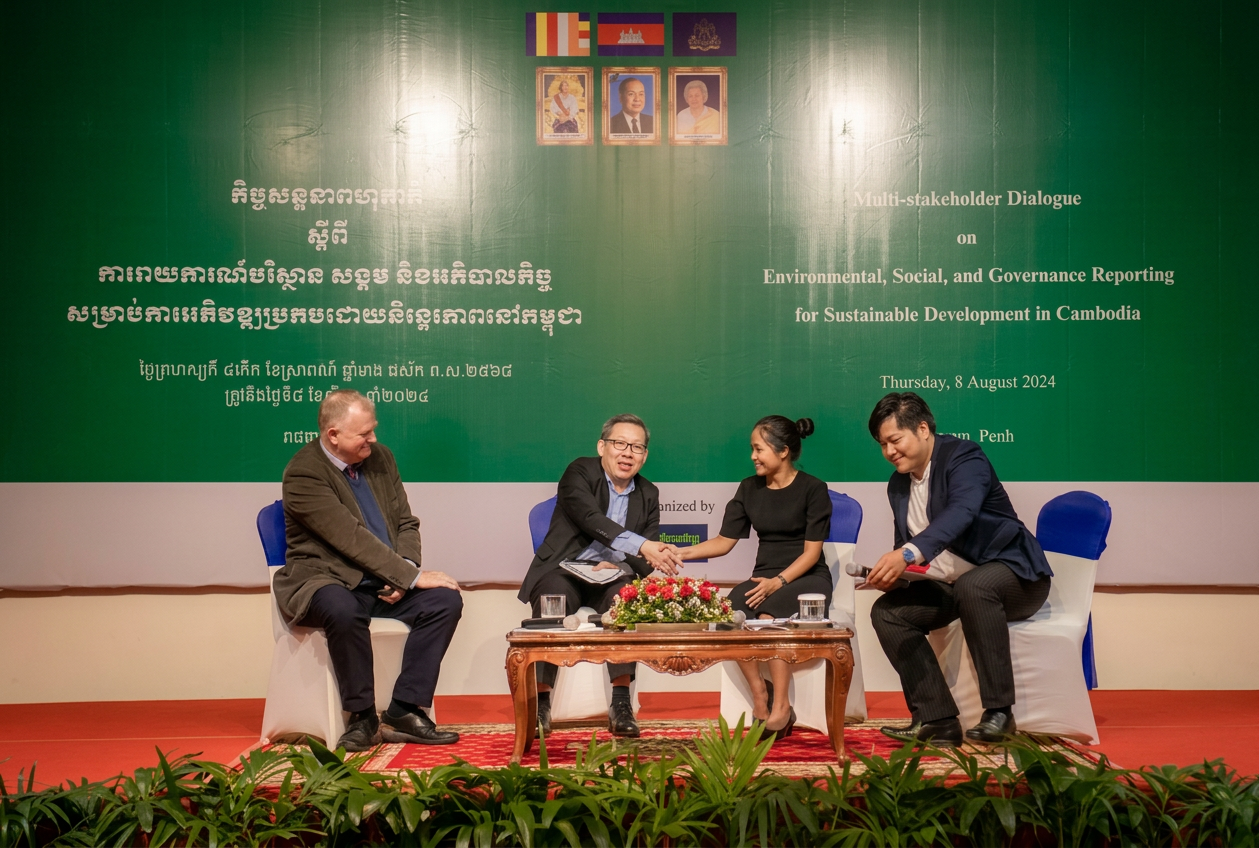
    It was the morning of 8 August 2024, at the Himawari Hotel in Phnom Penh, not yet 8:30.

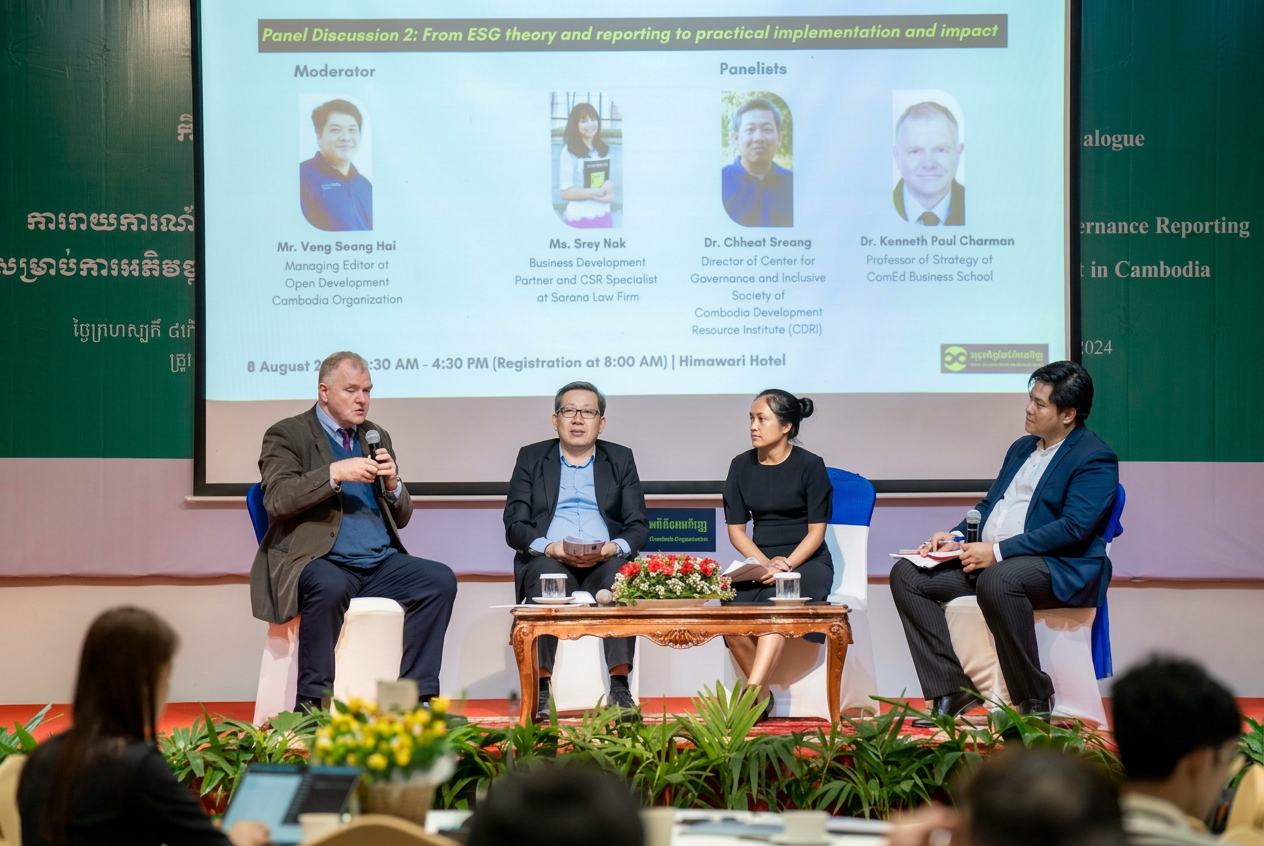
    By the end of the day, 75 people would have taken part of the conversation — business representatives, university students, researchers, civil society program managers, and people from the public who simply wanted to understand what “ESG” actually meant.

    Nobody in that room fully agreed on what ESG should look like in Cambodia.

    That was, in a quiet way, the whole point of the day.

    Ms. Sin Kimsean, a Board Member of ODC, giving a welcoming remark.

    You can read what happened once the day began — the agenda, the two panels, and what the speakers discussed — in the two event write-ups:

    What neither post tells you is what it took to get that room to exist in the first place.

    This is that story.

    It didn’t start with a concept note

    It started years earlier, during the COVID-19 lockdowns, in front of a spreadsheet.

    My team and I were working on a foreign-investment project, building a reliable dataset on foreign investment in Cambodia, field by field, company by company. It was slow, careful work — the kind that happens over months and years rather than in a single visible moment.

    That work eventually grew into an interactive dashboard, built as part of the same project, well before the dialogue was ever conceived.

    At first, the dashboard seemed like the natural endpoint: organise the information, make it accessible, and help people understand where foreign investment was going.

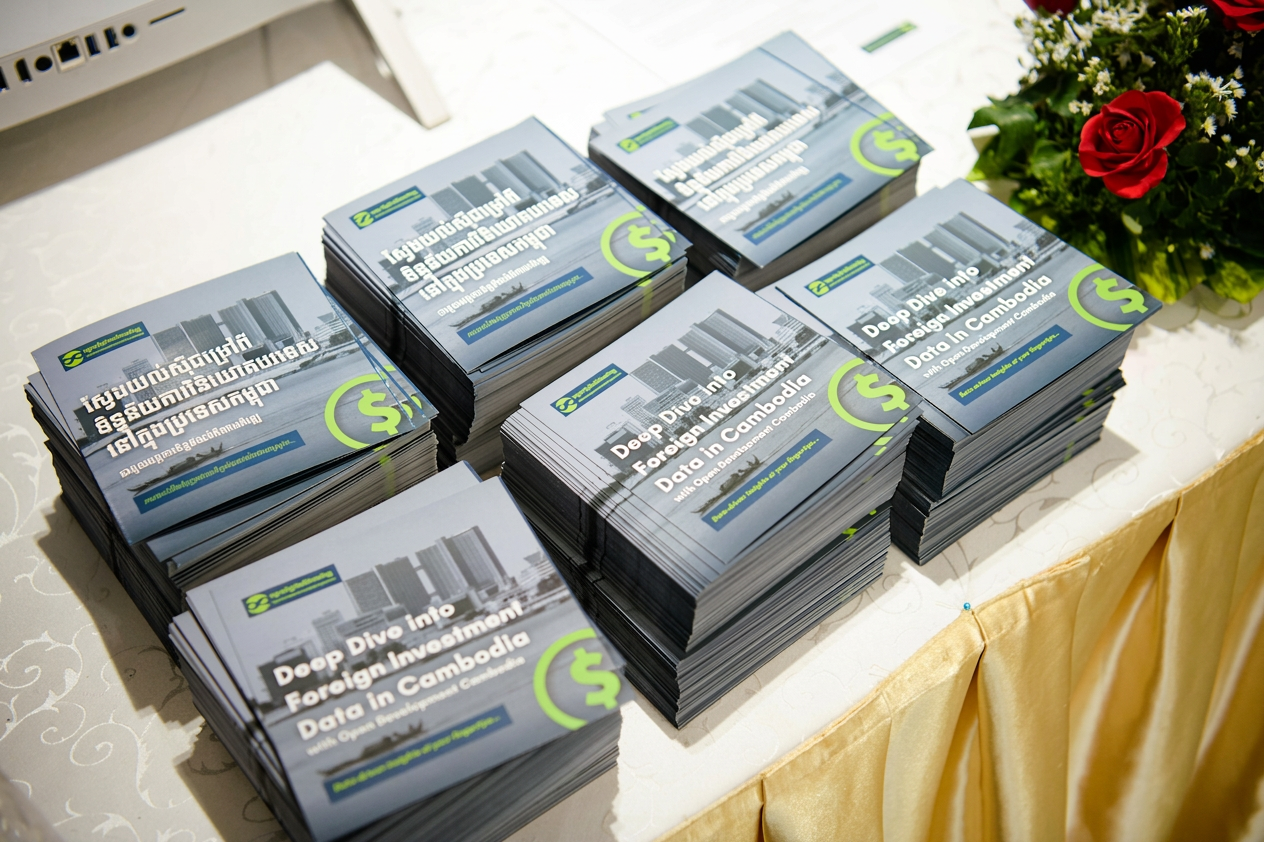
    Leaflet of the FIM data dashboard displayed at the multi-stakeholder dialogue on ESG on 8 August 2024, Phnom Penh, Cambodia.

    But the more we worked with the data, the more I realised that knowing where investment was going was only one part of the picture.

    Cambodia was actively positioning itself to attract and promote investment. The 2021 Law on Investment established an open, transparent and predictable framework intended to attract both Cambodian and foreign investors, while also strengthening Cambodia’s links to regional and global supply chains.

    That made me wonder about what happens beyond the investment figures.

    Attracting investment is one part of the story. What happens after that investment arrives is another.

    How do businesses operate? How do they manage environmental and social risks? How do they affect workers and communities? And as Cambodian businesses become increasingly connected to regional and global supply chains, how do they respond to the environmental, social and human-rights expectations that come with those markets?

    The more we worked with foreign-investment data, the more I became interested in that second part of the story.

    What does “responsible business” actually mean in Cambodia, and who gets to define it?

    That question pulled us toward ESG.

    Choosing ESG as an entry point

    Much of the civil society space I knew was still working on the Environmental Impact Assessment (EIA) side of environmental accountability — and for good reason. Public access to EIA information remained a challenge.

    But I had also sat across the table from enough business owners and investors to notice something about how conversations could begin.

    When the starting point is violations, non-compliance, or what a company has done wrong, the conversation can quickly become defensive. That doesn’t mean the concerns are unimportant. It means the starting point itself can make it harder for people to stay engaged.

    I began wondering whether EIA was the only way to enter a broader conversation about responsible business.

    ESG offered a different entry point.

    Businesses and investors were already talking about environmental and social issues through the language of risk, investment, market access and long-term growth. That created an opportunity to put environmental and social responsibility into the same conversation as business interests, rather than treating them as separate conversations happening on opposite sides of a table.

    That distinction mattered to me.

    So my team and I turned our attention there.

    And almost immediately, we ran into a different obstacle.

    Not resistance.

    Noise.

    ESG came wrapped in an ever-growing collection of standards, taxonomies, reporting requirements and disclosure frameworks. A government officer, a factory representative, a legal researcher, a civil society program manager and a university student could all use the word “ESG” while coming from completely different reference points.

    Before asking people to agree, I thought, perhaps they first needed a chance to explain what they meant.

    I didn’t believe the answer was to wait until everyone had the same definition.

    I believed someone had to bring these people to the same table, on purpose, and let them define their terms out loud, in front of one another.

    And perhaps data could help create that space — not because data is always neutral in how it is produced or interpreted, but because a well-grounded evidence base can give people something concrete to discuss without asking them to begin by taking a side.

    The part nobody sees in an event write-up

    What those two event posts don’t show is the six months before 8 August, spent largely outside the visible part of the project.

    Writing the concept note was the easy part.

    What followed was a lot of moving from meeting to meeting across Phnom Penh, trying to convince people who didn’t yet know our small project that this dialogue was worth their afternoon, their name, and, in some cases, their institution’s reputation.

    I was asking business association representatives, civil society organizations, law firms, and research institutes to sit on the same stage and say what they actually thought, in front of one another and 75 people in the room.

    Some conversations took one meeting.

    Others took several, followed by calls, messages and adjustments to how we explained the purpose of the event.

    There was always a question behind those conversations for me:

    Would people actually come?

    Not just physically attend, but genuinely participate?

    Because putting different sectors in the same room is one thing. Getting them to stay open to one another is another.

    All of this was happening against a project timeline that was closing and a budget that was shrinking — the two things that never wait until you feel ready.

    What got the event across the finish line wasn’t one clever idea.

    It was accumulated trust, collaboration and a lot of people quietly doing their part.

    The donor and partners backed the idea. The Executive Director and colleagues trusted that it was worth pursuing. A hired media team handled the filming and photography. Volunteers quietly took care of registration, minute-taking and other support on the day.

    None of what happened on stage existed by itself.

    There were months of conversations, follow-ups, coordination, small adjustments and people agreeing to contribute their time before anyone in the room heard the first panel question.

    That is the part an event report rarely captures.

    What made the day work

    The agenda is in the two linked posts above, but the agenda itself wasn’t what made the day work.

    What made it work was that the room allowed disagreement to remain in the room instead of turning into silence.

    A researcher could raise concerns about greenwashing and workers’ rights in the same conversation where a business representative could explain what was realistically achievable for a small factory with limited resources.

    Those perspectives didn’t always sit comfortably together.

    They didn’t need to.

    Nobody had to pretend to agree. They just had to stay in the conversation.

    And for a full day, they did.

    That was something I had thought about when putting the event together. I wasn’t trying to engineer agreement. If everyone already agreed, there would have been little reason to bring them together in the first place.

    The challenge was to create enough structure for different perspectives to be heard, and enough trust for people to express them without the conversation immediately becoming a standoff.

    A hired media team filmed every session, so the conversation didn’t end when the day did.

    The recordings remain available as part of the project’s public record:

    The event itself lasted one day.

    The conversation, at least in some form, could continue beyond it.

    The part that’s mine to keep

    The dialogue is written into the organisation’s institutional record now, and that’s exactly as it should be.

    Projects belong to institutions. Events become part of organisational history. People move on.

    But I know what it took to get people from several different sectors, who don’t usually finish each other’s sentences, to sit down and try anyway.

    And I know that some of the speakers from that stage are still in touch with one another today, collaborating across different platforms to push ESG discussions and adoption forward in Cambodia.

    That, more than the attendance number, is the outcome I remember most.

    Maybe that’s what I was really trying to create all along.

    Not simply a successful event, but a relationship that could survive the event.

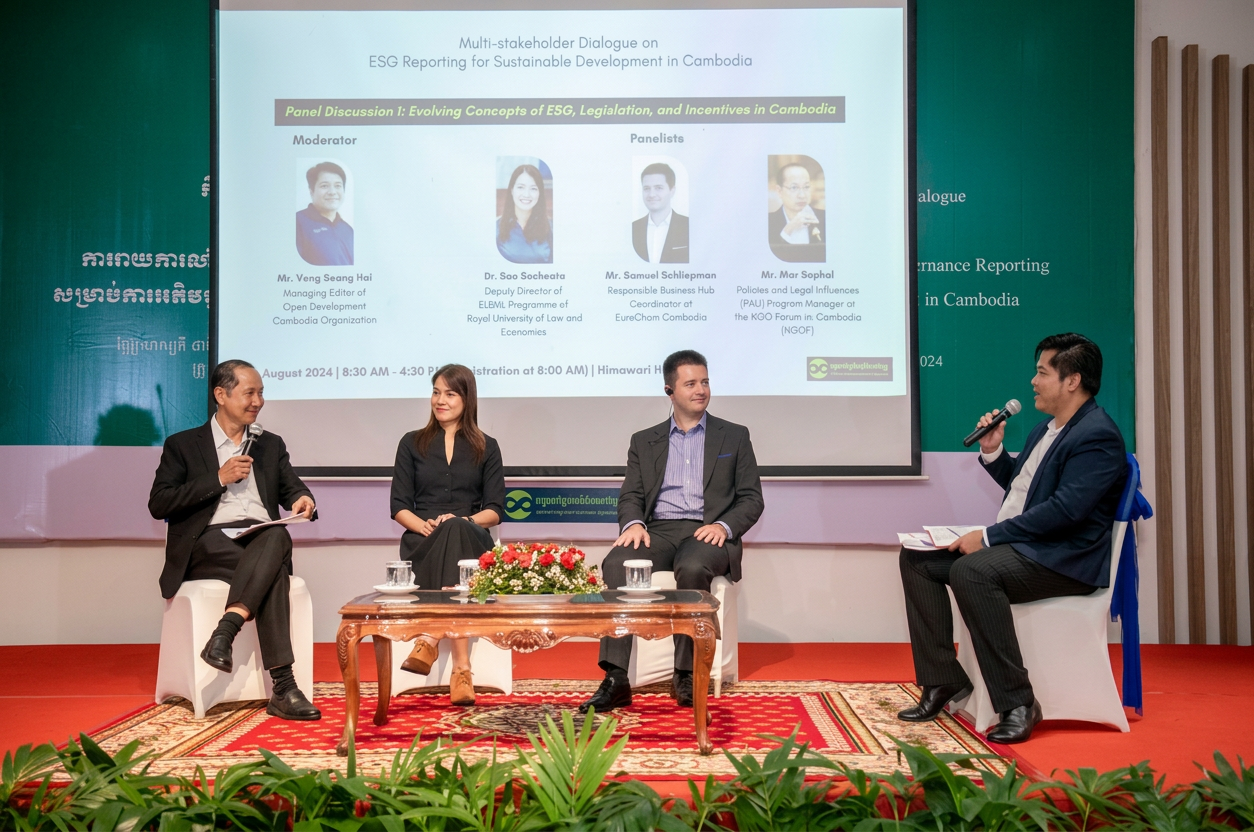
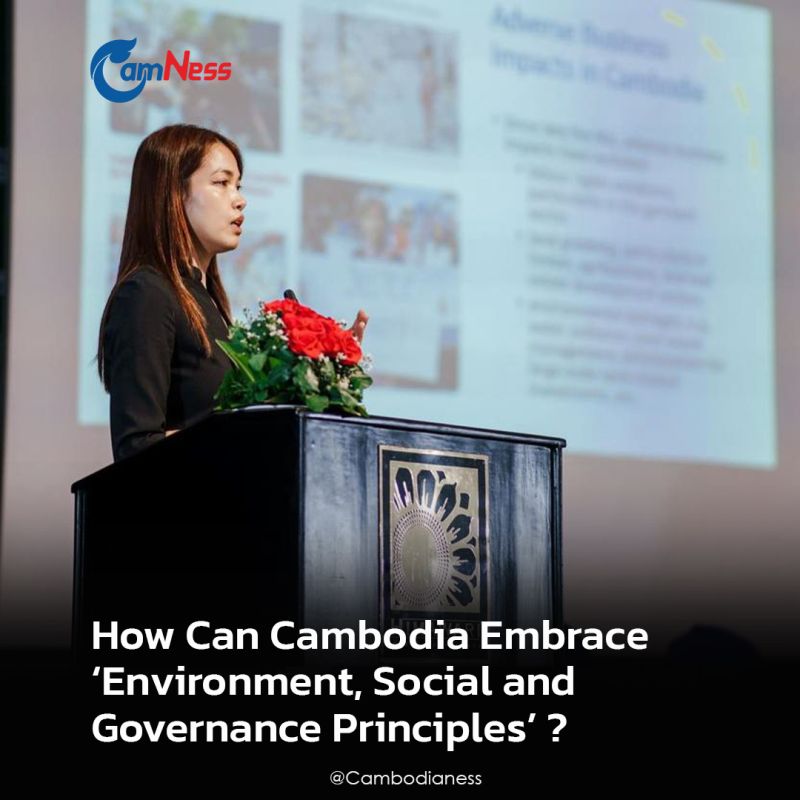
    Dr. Socheata Sao raises the idea of a publicly accessible platform that compiles ESG and sustainability reports from Cambodian companies in a CamNess article, “How Can Cambodia Embrace ESG Principles “, published on 23 November 2024.

    What stayed with me

    Looking back, I don’t think the most important thing I learned from that project was about ESG.

    It was about how conversations begin.

    Sometimes the biggest obstacle isn’t disagreement.

    It’s that people are starting from completely different places and using the same words to mean different things.

    Before asking people to find common ground, someone has to create a place where they can explain where they are standing.

    And sometimes the most useful role is not to have the answer, but to create the conditions for other people to have a conversation worth continuing.

    The data mattered.

    The research mattered.

    The concept note mattered.

    The budget mattered.

    The logistics definitely mattered.

    But none of those things, on their own, could bring five different sectors to the same table.

    People did that.

    Trust helped them stay there.

    And perhaps that is the quiet part of this kind of work that I have come to value most.

    You can organise the room, prepare the agenda, coordinate the speakers and make sure the microphone works.

    But in the end, you cannot manufacture a genuine conversation.

    You can only create the conditions for one to happen.

    The event lasted one day.

    The relationships didn’t.

    That’s the part I still carry with me.

  • Beyond Access: Rethinking My Work Through Equity-Focused Design

    Beyond Access: Rethinking My Work Through Equity-Focused Design

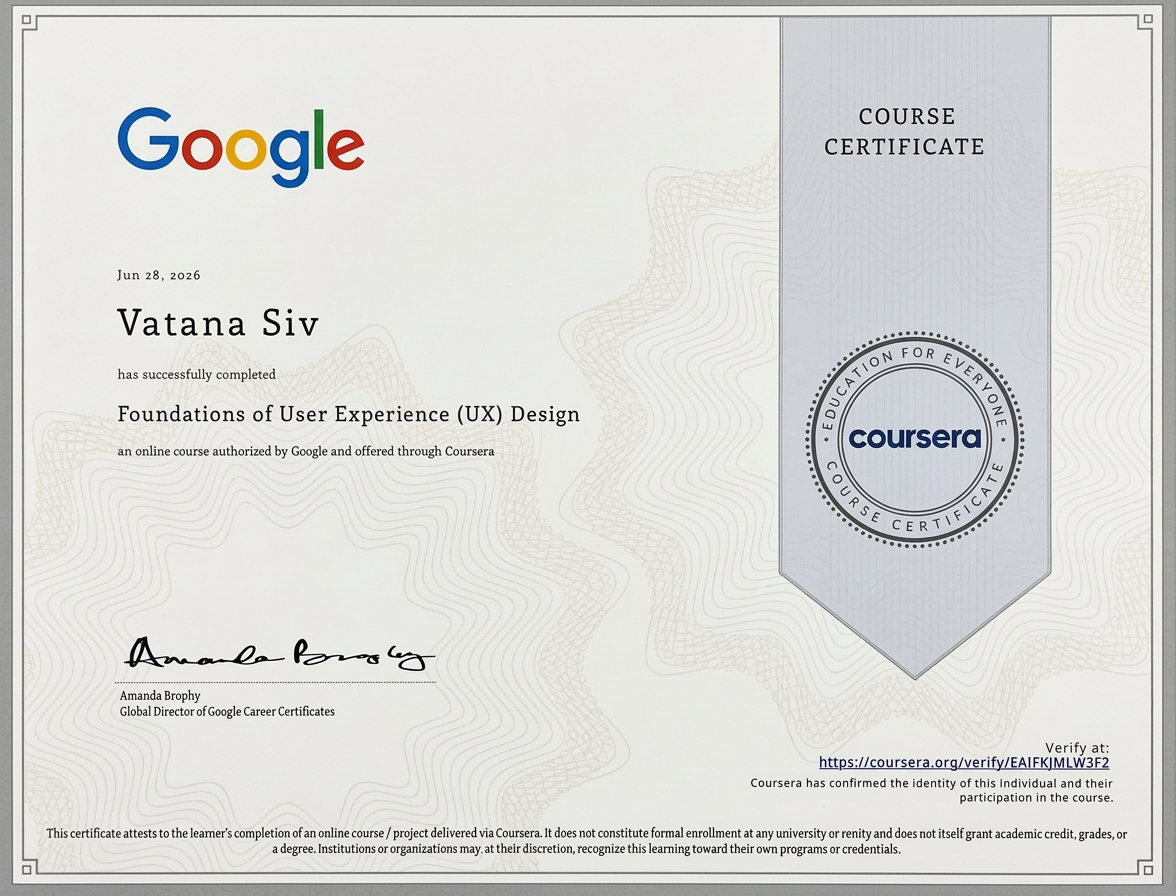
    I recently completed Foundations of User Experience (UX) Design, part of the Google UX Design Certificate on Coursera.

    I expected to come away with a new vocabulary—wireframes, prototypes, user journeys, design thinking. What I didn’t expect was for one concept, equity-focused design, to make me stop and look back at work I had already done.

    It felt strangely familiar.

    Not because I had formally studied equity-focused design before, but because I recognised some of the questions in work I had been doing for years.

    A concept that named what I already knew

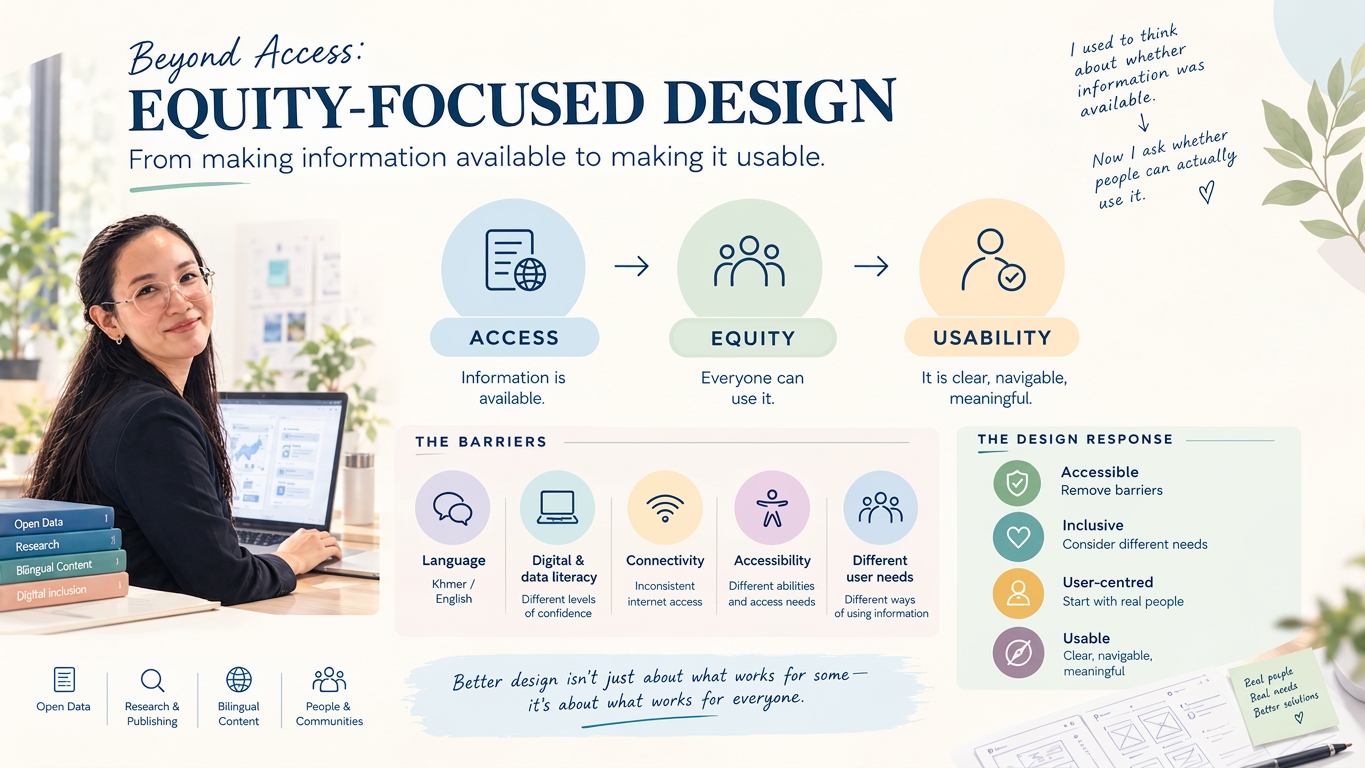
    My work sits at the intersection of civil society, data, and content — managing research and publishing platforms, producing bilingual content, and building tools meant to make information more open and accessible.

    In that work, “the user” was never really an abstraction.

    It was someone with limited internet access, limited digital literacy, or limited data literacy, trying to find information that was rarely built with their reality in mind.

    That’s why equity-focused design landed so differently for me.

    It wasn’t a completely new idea I had to learn from scratch. It gave me language for something I had sensed through experience: making information available is not the same as making it usable.

    I had spent years helping put information online. But the course made me ask a slightly uncomfortable question:

    What happens after someone reaches the platform?

    Can they find what they need?

    Do they understand what they are looking at?

    Do they know what to do next?

    And what if the platform itself assumes a level of digital or data literacy that they don’t have?

    Those questions felt obvious once I started asking them. I’m not sure why I hadn’t been asking them in quite the same way before.

    Design as a bridge, not just a craft

    Perhaps that’s the shift this course gave me.

    I started seeing UX design less as a discipline concerned mainly with how something looks or functions, and more as another way of thinking about the gap between a system and the people expected to use it.

    My first training was in engineering, where I learned to think about systems, constraints, and how things are built to function. Years later, working with open data taught me to think about access to information—who has it, who doesn’t, and what information can make possible.

    UX is making me pay closer attention to what happens in between:

    What does a person actually experience when they encounter the system I helped build?

    That question feels relevant far beyond websites or applications.

    Recognising my own work in the framework

    This is where the course’s core principles — user-centred design, accessibility, and design thinking — stopped feeling like industry jargon and started feeling like a description of decisions I’d already been making instinctively, without a name for them.

    When I led the launch of a knowledge-sharing platform for civil society organisations, I was already thinking about who might struggle to use it — people with limited digital literacy, people more comfortable in Khmer than English, people with inconsistent internet access.

    I made choices around those realities.

    But I was doing it mostly through experience and instinct, rather than through a deliberate design process.

    I was reacting to barriers as I noticed them.

    The course made me realise that there is a difference between noticing a barrier and designing for it from the beginning.

    That distinction has stayed with me.

    It made me look differently at some of the platforms and content I had worked on—open data tools, learning portals, bilingual resources—and wonder where I had designed around people’s realities, and where I had simply made something available and hoped they could navigate the rest themselves.

    What “access” missed in my own work

    Looking back, I can see how much of my work treated digital transformation as an access problem:

    Get the platform online.

    Get the content published.

    Get the data open.

    And that mattered.

    But access was never the whole story.

    I’ve seen how someone can reach a platform and still not really be able to use it because the way it is structured assumes a level of digital or data literacy they don’t have.

    That’s not necessarily a connectivity problem.

    Sometimes it is a design problem.

    And I didn’t have the framework to fully see that distinction until now.

    For platforms like the ones I work on—intended to open information and knowledge sharing to civil society—the goal therefore cannot stop at putting content online.

    The content has to be findable.

    Understandable.

    Navigable.

    And meaningful to the people it is meant to serve.

    That sounds obvious as I write it now. But sometimes we only recognise the obvious after experience gives us a reason to look again.

    What I want to notice differently

    This course didn’t give me a brand-new mission.

    It changed what I notice.

    I’ve spent years working on platforms meant to make information and knowledge more open. What I’m taking from this course is a more deliberate way to think about the people on the other side of those platforms.

    Not just:

    Can they access it?

    But:

    Can they use it?

    And perhaps even more importantly:

    Were they considered when we designed it?

    That’s the shift I want to carry into future work—to apply equity-focused, user-centred thinking from the beginning, rather than waiting for barriers to appear and then trying to respond to them.

    I don’t think this course changed what I care about.

    It gave me a better way to see it.

    And maybe that’s what learning is sometimes supposed to do—not give us an entirely new way of working, but give us the language to understand our own work more clearly.

    I used to think more about whether people could reach the information.

    Now I’m thinking more about what happens once they get there.

  • A Small Joy I Still Carry

    A Small Joy I Still Carry

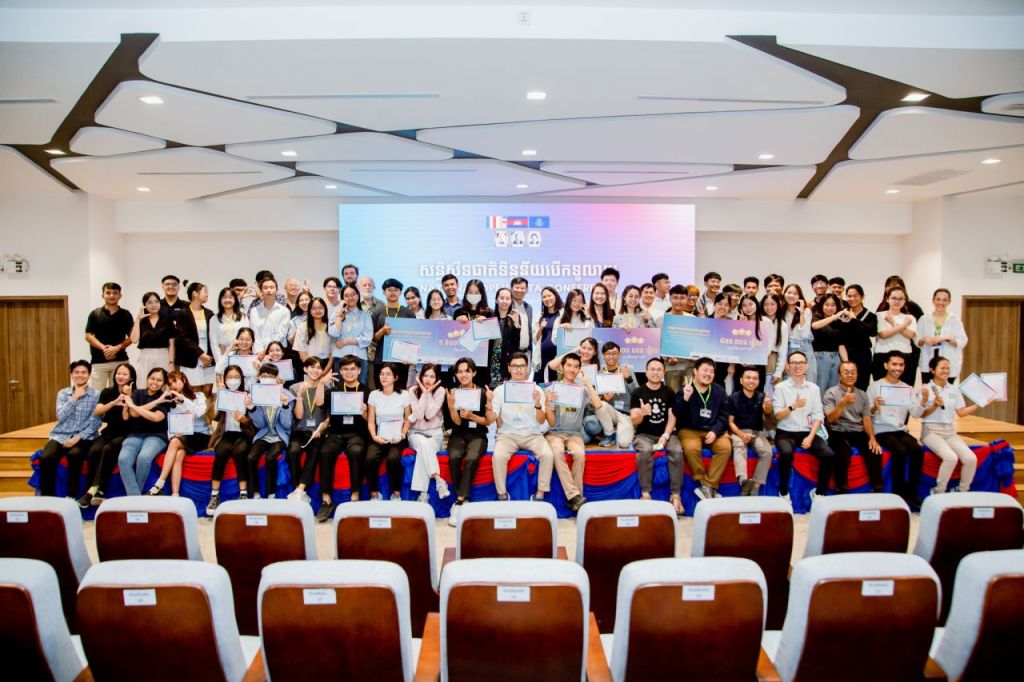
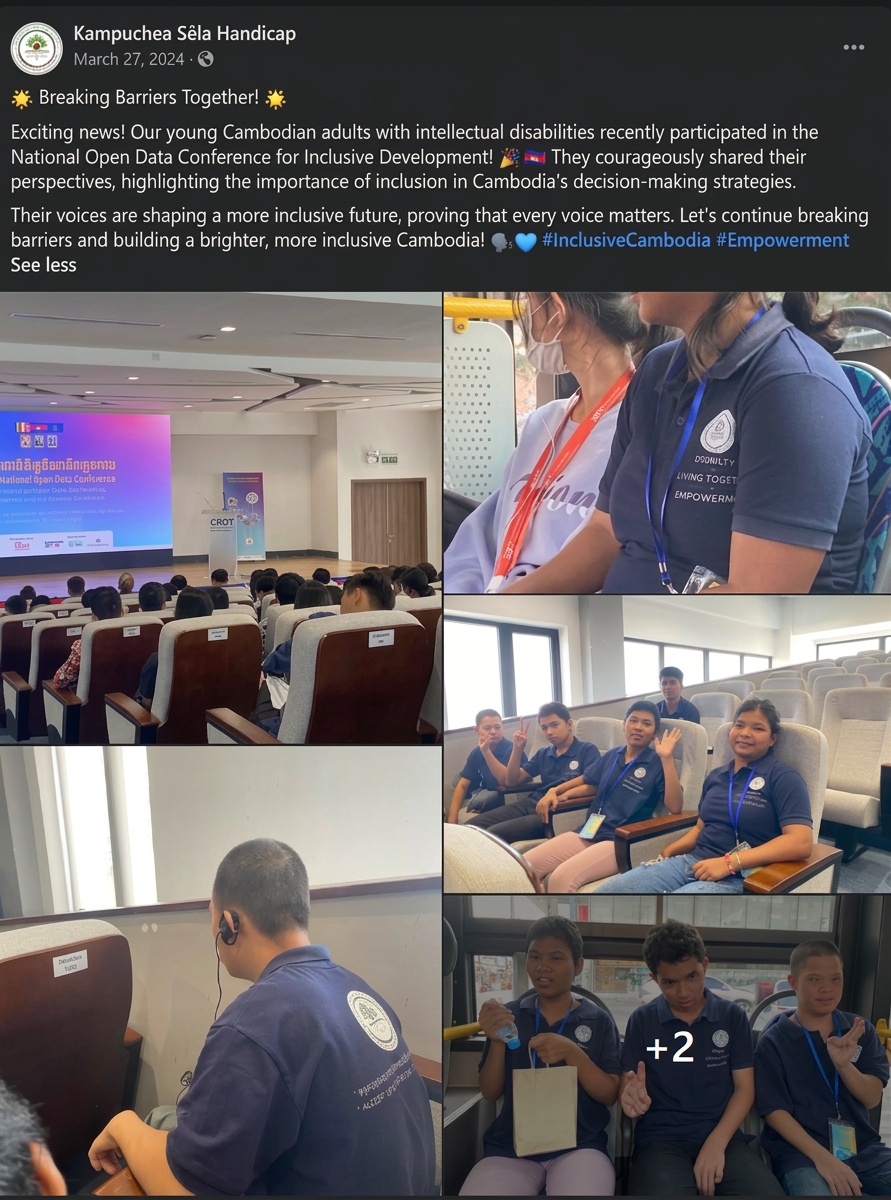
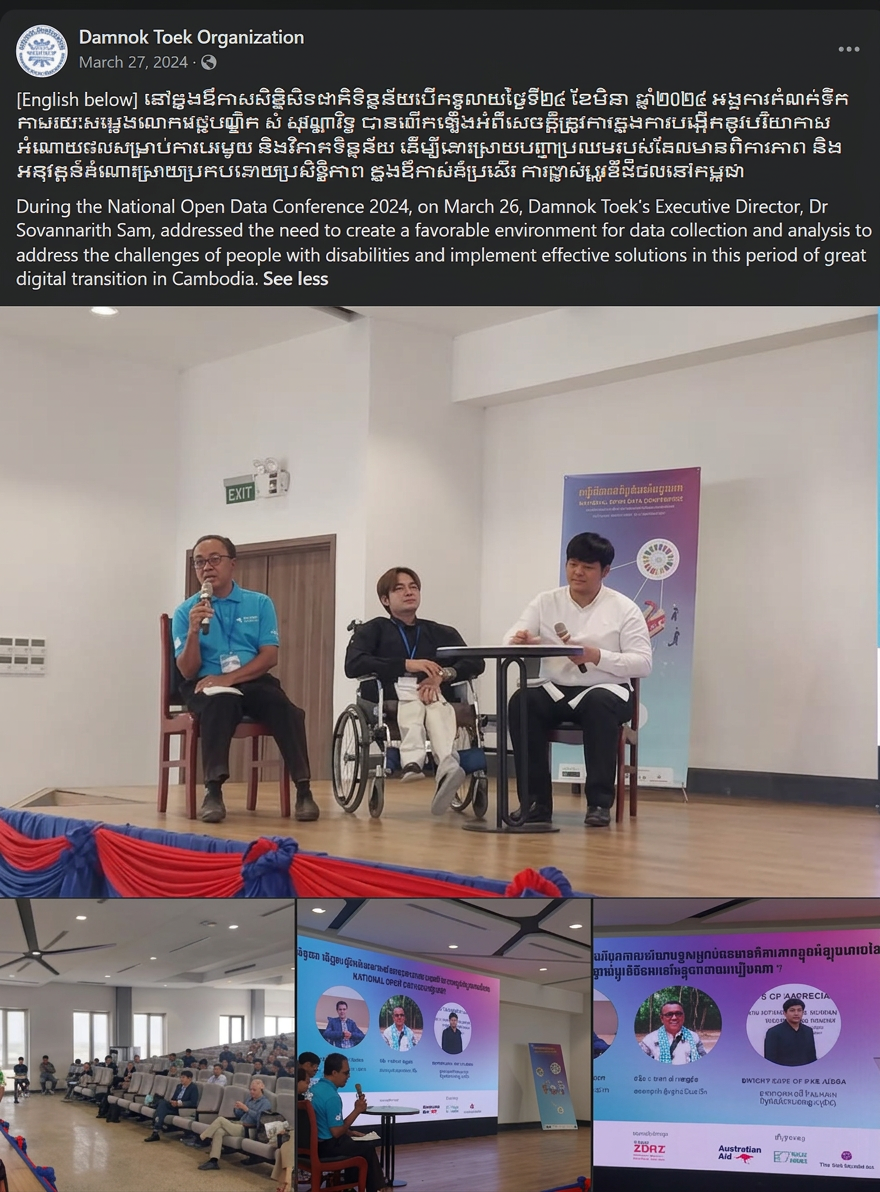
    While going back through old notes and photos to write these stories, I came across two Facebook posts I’d never properly sat with before—both from a week in March 2024, when we hosted Cambodia’s National Open Data Conference.

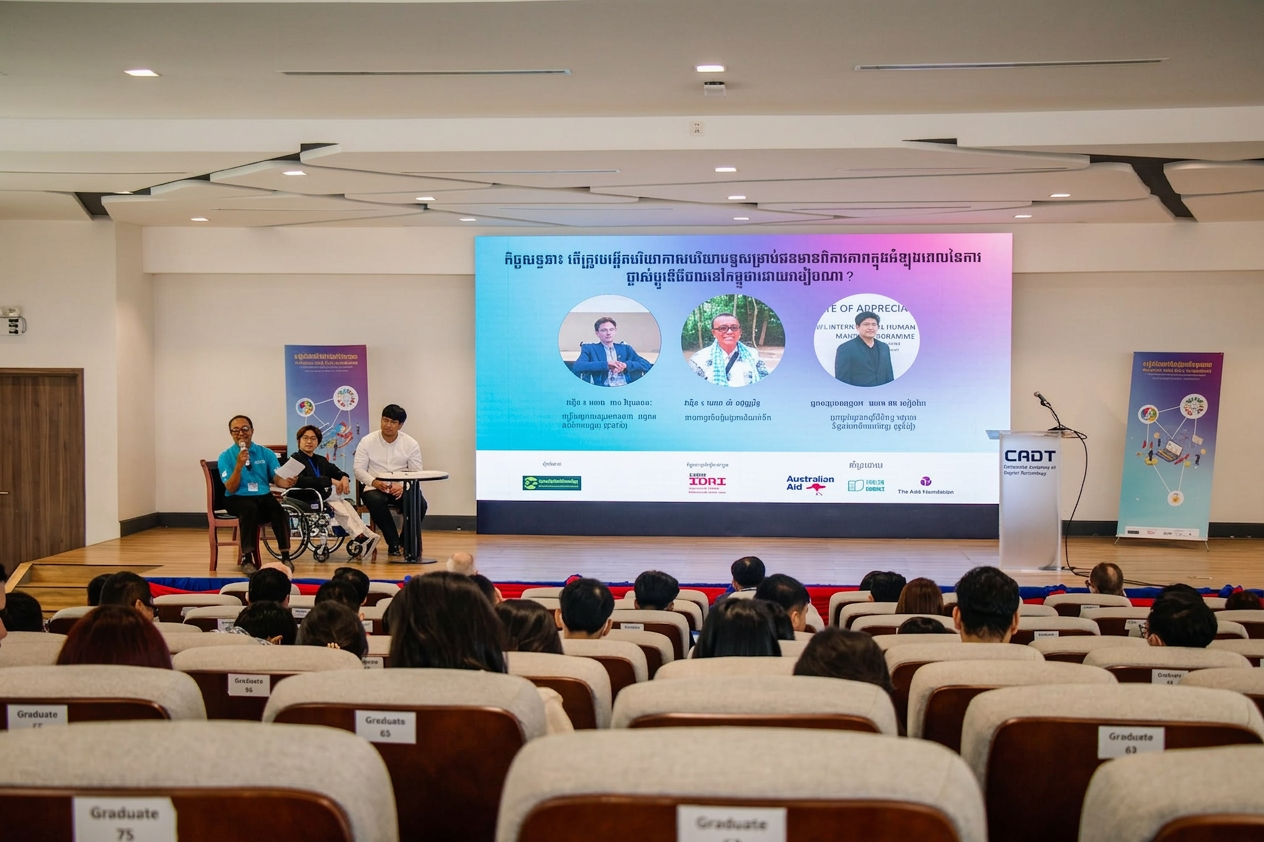
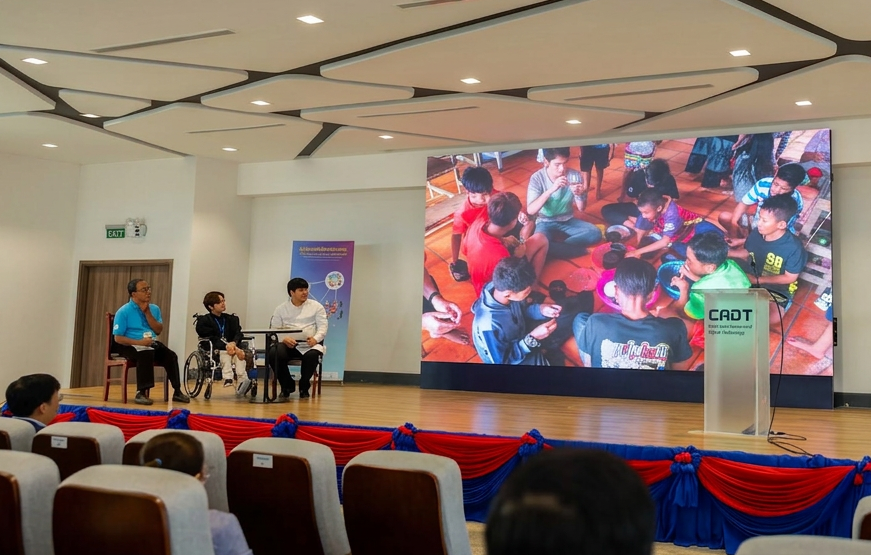
    One was from Kampuchea Sëla Handicap, showing young Cambodian adults with intellectual disabilities, their name tags still slightly crooked, having just spent two days in a room usually reserved for ministries, development organisations, and data professionals. The other was from Damnok Toek, whose director had joined one of our panels and spoken plainly about the need for Cambodia’s digital future to include people like the communities they represent.

    Reading those posts again, years later, settled into something quiet and warm. They were a small reminder that the care we had put into that week had reached people in a way that no report, agenda item, or project indicator could really capture.

    What I heard as a mother

    During the hackathon’s call for solutions on the first day, and again two days later during the disability panel, I found myself listening closely to struggles I’d rarely heard spoken about so plainly before.

    I’m a mother of two, and something about hearing how children with disabilities can sometimes be left at hospitals or care centres—without parents or relatives able to care for them, leaving organisations already stretched thin on funding to carry the full weight of their care—affected me deeply.

    What stayed with me was not only the difficulty of their circumstances, but also how limited their access to technology and opportunities could be.

    We were gathered in a conference built around data, technology, and digital innovation. Yet some of the people who could benefit from that progress most were still struggling to have their voices heard.

    That made the idea of inclusion feel much more immediate to me.

    It was no longer just something I could write into a project plan or mention in a discussion about digital access. There were actual people sitting in the room, telling us what those barriers looked like from where they stood.

    A booth of their own

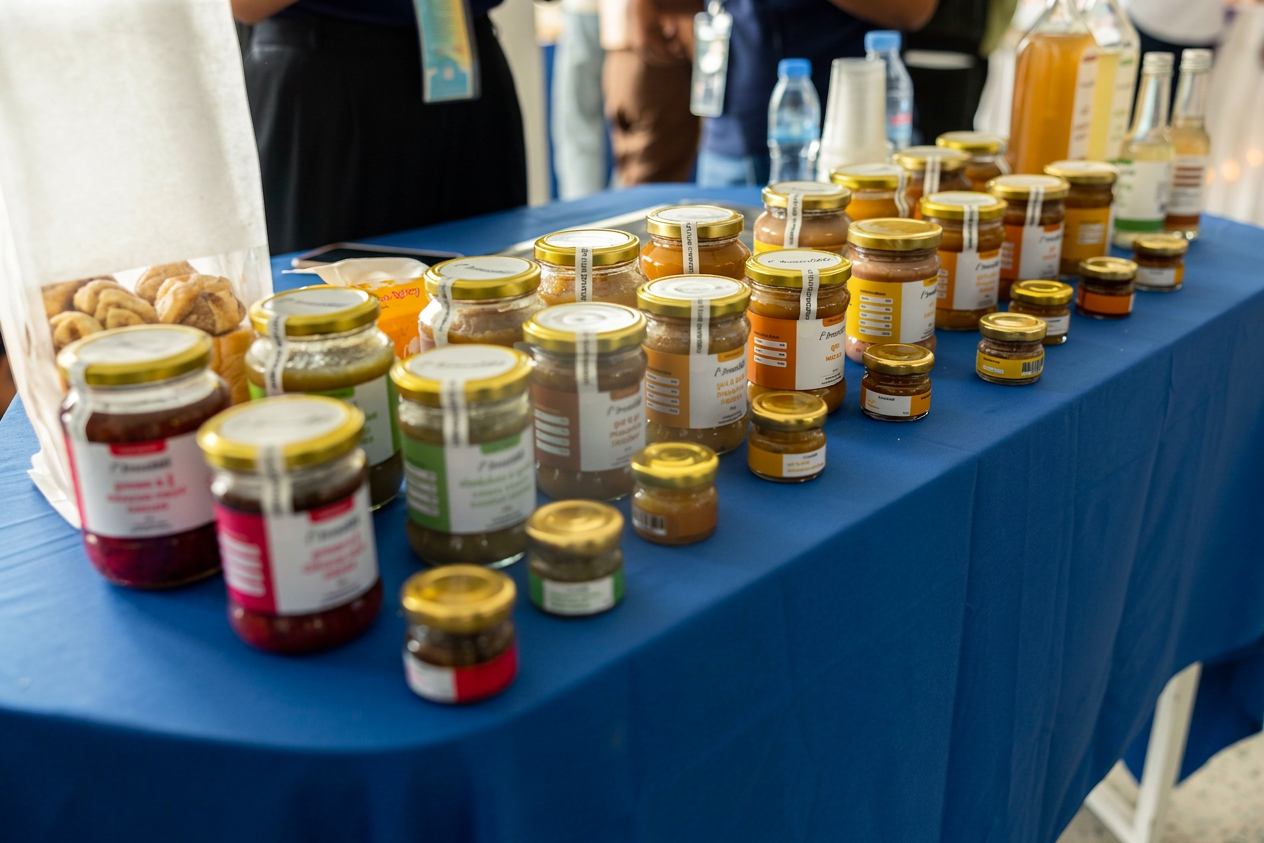
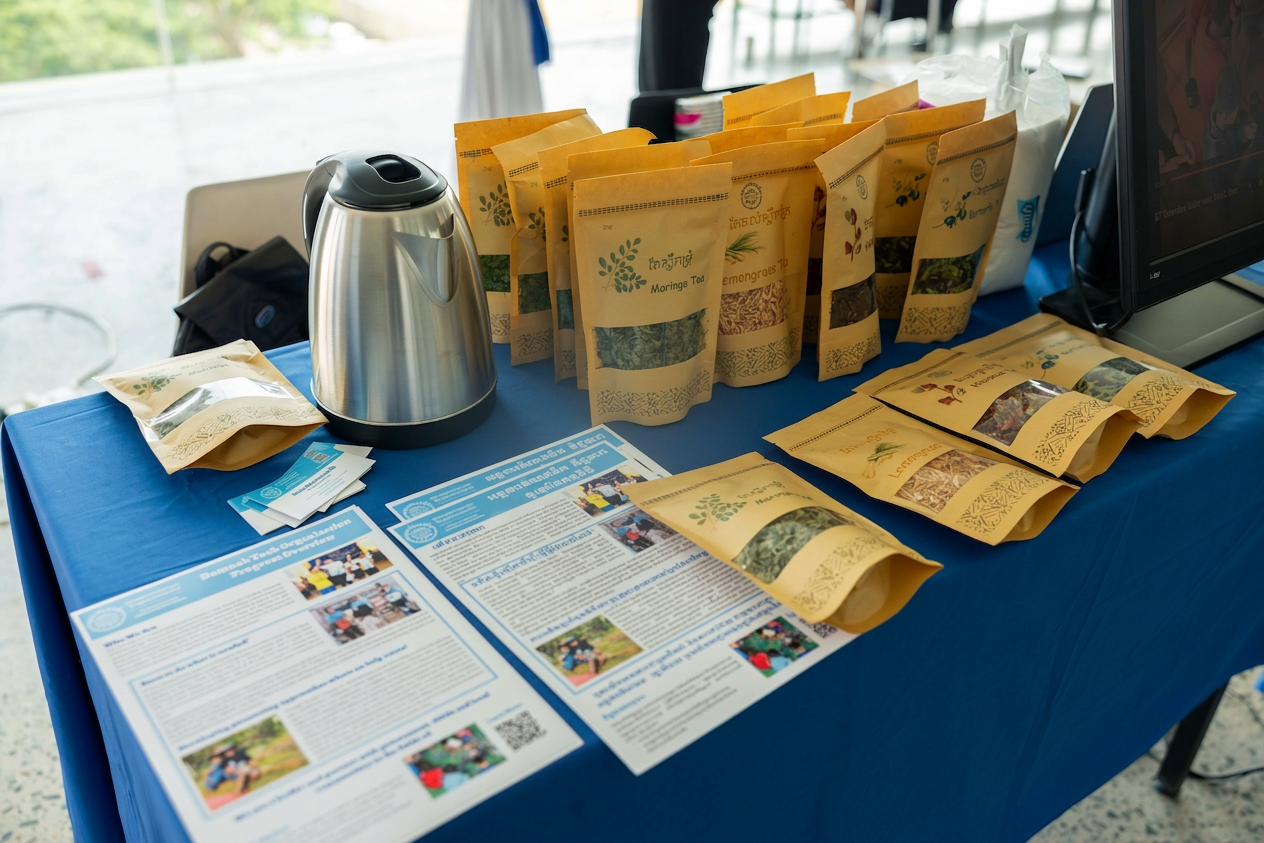
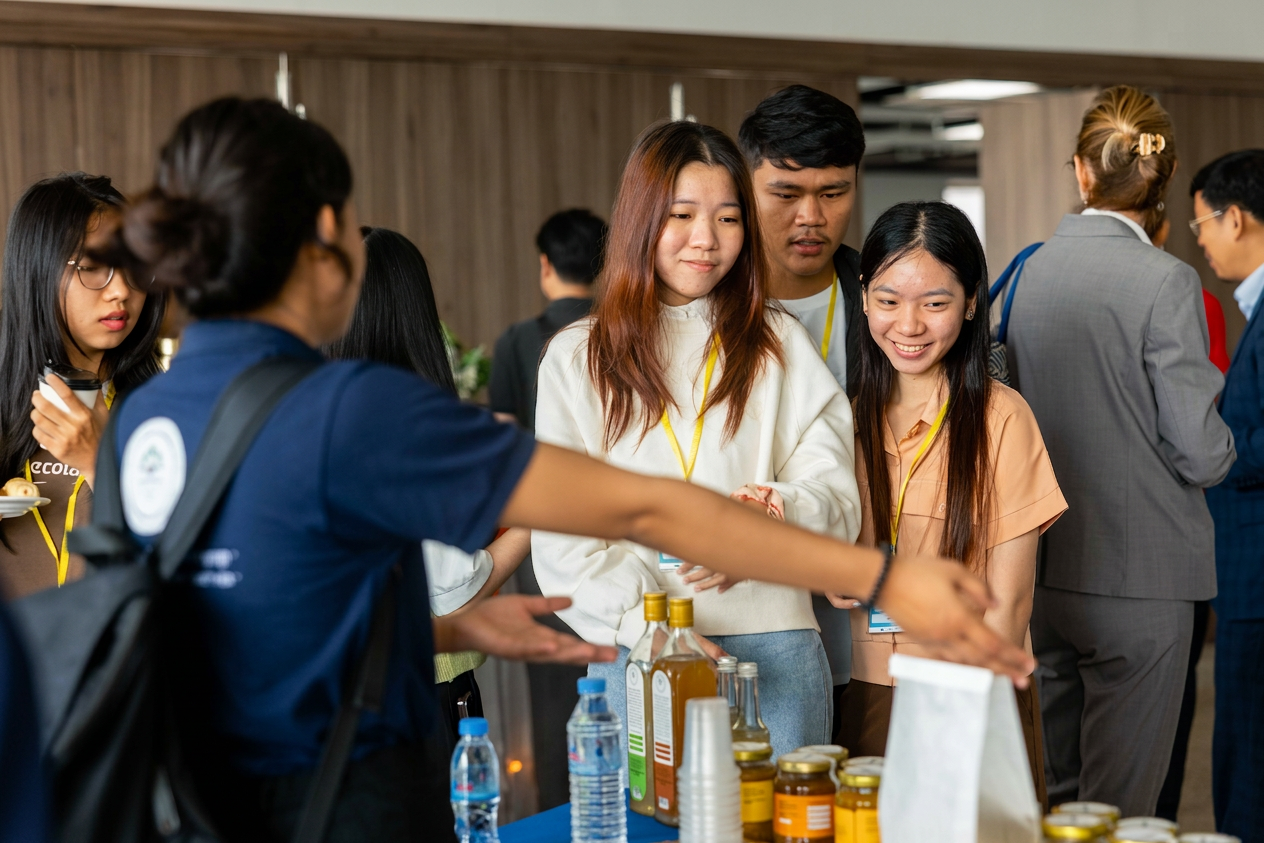
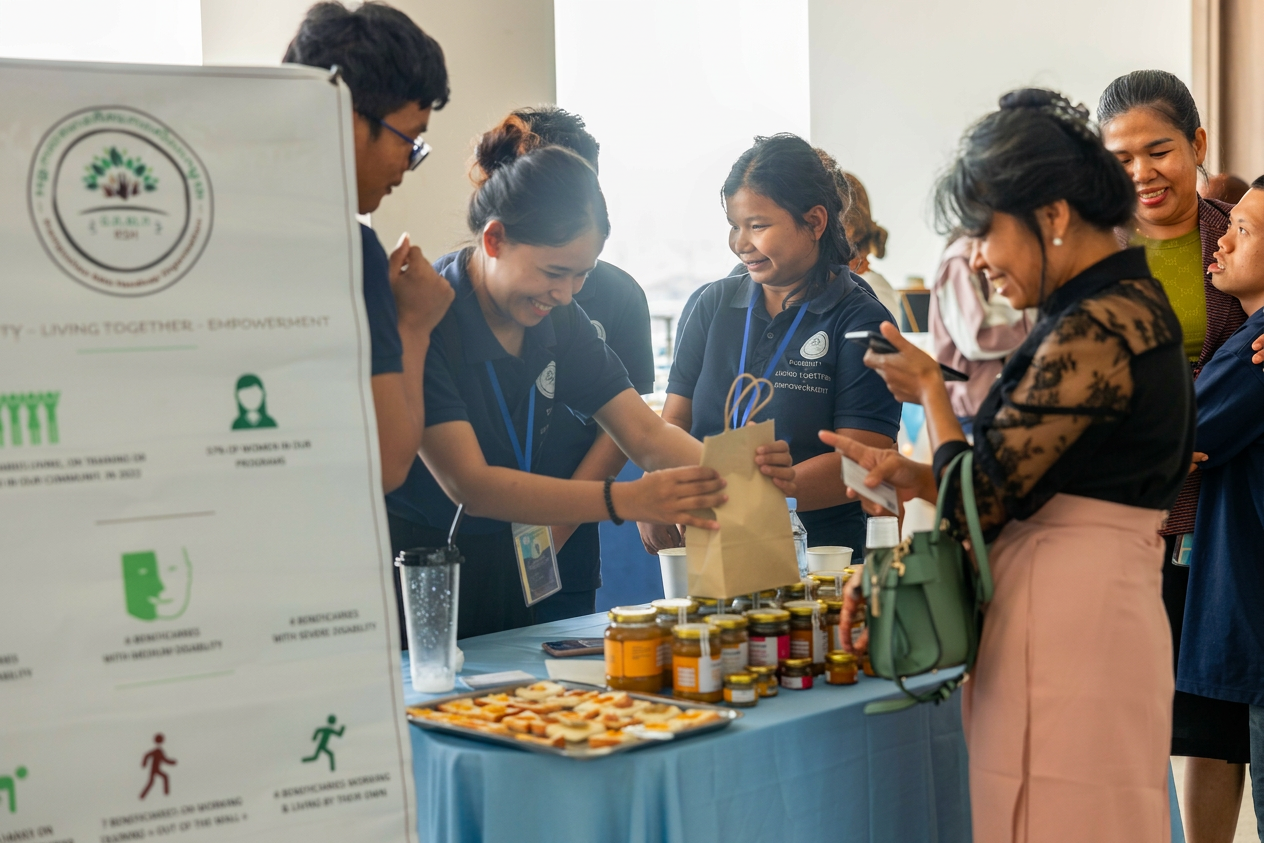
    That’s part of why, when Kampuchea Sëla Handicap and Damnok Toek Organisation joined the conference, I made sure they had a booth of their own—a small table where they could display fruit jam made at their centre, right alongside the panels, demonstrations, and data dashboards.

    It was a small decision, but it mattered.

    They were delighted simply to be there as participants, with something of their own to share. They weren’t there only as people being discussed in a disability-focused session; they were present as contributors, alongside everyone else.

    For those two days, I think they felt genuinely welcomed, heard, and included.

    And perhaps that was the point.

    Sometimes inclusion is not a complicated intervention. Sometimes it starts with noticing who is in the room, asking what would make it easier for them to participate, and then making space.

    What their words told me

    That’s really why those two posts meant so much to me.

    What moved me most was hearing that, perhaps for the first time in that kind of setting, technology practitioners had taken the time to sit down, listen, and learn from them—rather than arriving with a ready-made solution without first asking what people actually needed.

    Their words carried something I hadn’t expected: hope for more events like this, but also a quiet insistence that people with disabilities—organisations, representatives, and individuals alike—deserve an equal seat at the tables where policy and technology are discussed and shaped, not only at events created specifically for them.

    Kampuchea Sëla Handicap and Damnok Toek joined young tech innovators at the Open Data Day 2024 hackathon on 2 March 2024, sharing real-life challenges faced by people with disabilities and inspiring inclusive digital solutions.

    Looking back, that is probably the part of the conference I remember most clearly.

    It reminded me that inclusive development is not simply about inviting people into a project or adding an inclusion activity to a workplan. Sometimes it is about making space for people to participate, contribute, and be seen as part of the conversation from the beginning.

    And that’s really why I care so much about the work itself—the project, the plan, the people it’s meant to reach, and whether it actually makes a difference in their lives.

    Some things can matter enormously and still never show up in a workplan, a proposal, an annual report, or a performance review.

    But sometimes, years later, you come across a photograph or a few words from someone who was there—and you realise that the effort reached further than you knew.

    For me, that is what makes the work worth it.

    Want to explore the events further?

    If you’re curious about Open Data Day and Cambodia’s first National Open Data Conference in 2024, you can explore the event stories, videos, and outcomes report below:

    For more details, see the outcomes report.